


By Dr. Avi Verma
The results of the 2024 Lok Sabha elections, announced on June 4th, have provided a clear yet contentious outcome in India’s political landscape.
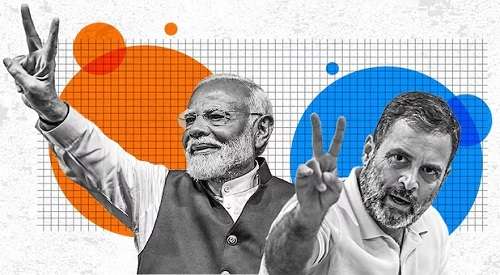
The ruling National Democratic Alliance (NDA), led by Prime Minister Narendra Modi, has secured 292-294 seats, ensuring a majority and paving the way for a third consecutive term. The opposition coalition, Indian National Developmental Inclusive Alliance (INDIA), garnered 230-233 seats, while independents and smaller parties captured 18 seats. In the aftermath of the results, PM Modi has declared victory, whereas Rahul Gandhi, a key figure in the INDIA coalition, has remained reticent about their next steps.
NDA’s Victory and Modi’s Leadership
The NDA’s performance in the 2024 elections, while securing a majority, fell short of an independent BJP majority and saw a considerable loss of seats compared to the 2020 elections. With 292-294 seats, the NDA has crossed the majority mark in the 543-member Lok Sabha, but the reduced numbers highlight the challenges faced by the coalition.
INDIA Coalition’s Performance
The INDIA coalition, though falling short of forming the government, has made a significant impact by securing 230-233 seats. This performance highlights the coalition’s ability to consolidate anti-BJP votes and present a formidable challenge to the NDA. The INDIA alliance’s diverse composition, including regional heavyweights and the Indian National
Congress (INC), indicates a broad-based appeal that cannot be overlooked.
The role of independents and smaller parties
With 18 seats, independents and smaller parties hold a potentially decisive role in the formation of the government. Their support could be critical in either bolstering the NDA’s majority or providing the INDIA coalition with a chance to stake a claim. These parties are likely to engage in negotiations with both sides, seeking to maximize their influence and secure favorable terms for their support.
Reasons behind NDA’s loss of seats in key states
The 2024 Lok Sabha elections saw a noticeable reduction in the number of seats won by the Modi-led NDA government, particularly in key states like Uttar Pradesh (UP) and Maharashtra. Several factors contributed to this shift:
1. Anti-Incumbency Factor
UP: The BJP has been in power for multiple terms both at the central and state levels. Voter fatigue with prolonged governance by the same party often leads to a search for alternatives. Issues like unemployment, agricultural distress, and inadequate local infrastructure remained prominent concerns for many voters.
Maharashtra: The state government, a coalition between BJP and smaller regional parties, faced internal conflicts and allegations of inadequate disaster management, especially during the pandemic and natural calamities.
2. Strong Opposition Alliances
UP: The INDIA coalition effectively united key regional players like the Samajwadi Party (SP) and Bahujan Samaj Party (BSP), who managed to consolidate their vote banks against the BJP. The alliance proved formidable in countering BJP’s dominance.
Maharashtra: The Maha Vikas Aghadi (MVA) coalition, comprising the Shiv Sena (UBT), Nationalist Congress Party (NCP), and Indian National Congress (INC), presented a united front. Their combined grassroots
outreach and voter mobilization efforts were successful in key constituencies.
3. Economic and Social Issues
Economic Concerns: Despite economic growth figures, many young voters expressed dissatisfaction with job creation and employment opportunities. The discontent was particularly significant in urban and semi-urban areas. Persistent issues in the agricultural sector, including low crop prices and delayed relief measures, impacted rural voters, especially in agrarian states like UP and Maharashtra.
Social Issues: The opposition effectively leveraged caste-based issues and alliances. In UP, the SP and BSP’s combined efforts addressed the concerns of
OBCs and Dalits, respectively, leading to significant inroads
into BJP’s traditional voter
base.
4. Regional leadership and local issues
UP: Akhilesh Yadav’s leadership of the SP and his appeal to younger voters helped the opposition gain ground. His strategic alliances with smaller parties also played a crucial role.
Maharashtra: The NCP’s Sharad Pawar and Shiv Sena’s (UBT) Uddhav Thackeray effectively communicated local issues and criticized the BJP’s handling of state-specific concerns, resonating well with voters.
5. Campaign strategies and messaging
UP: The INDIA coalition ran targeted campaigns addressing local grievances, focusing on employment, social justice, and anti-incumbency. Their messaging resonated with a broad spectrum of voters who felt neglected by the central government’s policies.
Maharashtra: The MVA’s campaign emphasized the failures of the state government in managing the pandemic, agrarian issues, and urban development. Their narrative of local empowerment and better governance struck a chord with the electorate.
As PM Modi prepares for his third term, his leadership will be tested in maintaining coalition unity and delivering on electoral promises. The INDIA coalition, despite their loss, has an opportunity to strengthen their organizational structure and present a credible alternative in future elections. The evolving political landscape of India continues to reflect the country’s rich diversity and democratic resilience.