


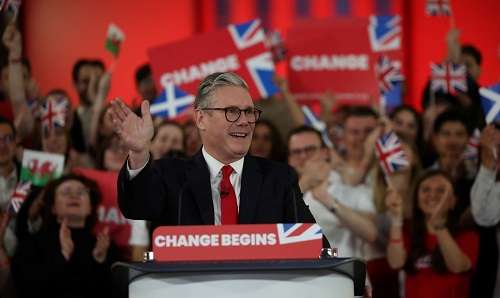
Keir Starmer, buoyed by a resounding victory in the recent UK parliamentary election, has pledged to lead Britain into a new era of national renewal after Labour secured a commanding majority in the 650-seat parliament. The election marked a seismic shift in British politics, ending the Conservative Party’s 14-year rule amidst widespread discontent over the cost of living crisis, faltering public services, and a string of scandals.
In his victory speech, Starmer declared, “Change begins now… We will end the chaos and start the work of rebuilding our country.” Labour’s triumph saw them gain a significant 210 seats, while the Conservative Party, led by Rishi Sunak, suffered its worst defeat in history, losing approximately 250 lawmakers, including senior ministers and former Prime Minister Liz Truss.
The election also reshaped the political landscape in Scotland and Northern Ireland. The Scottish National Party saw a dramatic decline, losing 38 seats and signaling a potential setback for Scotland’s independence aspirations. Conversely, Sinn Fein emerged as Northern Ireland’s largest party for the first time. Meanwhile, Nigel Farage’s Reform UK, though securing only four seats, garnered substantial support, posing a challenge to both major parties.
Following the defeat, a somber Rishi Sunak announced his resignation as Conservative Party leader, acknowledging the electorate’s call for change. Despite Labour’s convincing win, concerns linger over Starmer’s popularity and the challenges ahead. The party’s victory was achieved with fewer votes than in previous elections, reflecting the complexities of Britain’s electoral system and voter turnout dynamics.
Starmer assumes office amid daunting economic challenges, including high taxation, soaring debt levels, and strained public services like the National Health Service. While he has scaled back some of Labour’s ambitious spending plans, he has committed not to increase taxes for working people and has pledged to address issues such as migration and environmental policy.
Internationally, Starmer aims to mend relations with the European Union post-Brexit and has reaffirmed support for Ukraine in its conflict with Russia. His foreign policy stance echoes some of Sunak’s positions, despite their domestic political differences.
The Conservative Party now faces internal debates and criticisms over its election strategy and ideological direction. Some within the party argue it veered too far to the right, alienating traditional supporters, while others believe it failed to capture the imagination of voters who sought a more assertive stance on key issues.
Starmer’s unexpected victory represents a remarkable turnaround for Labour, which was perceived to be in crisis just a few years ago. The Conservatives’ series of scandals and internal strife underpinned their electoral downfall, paving the way for Labour’s resurgence and a new chapter in British politics under Starmer’s leadership.