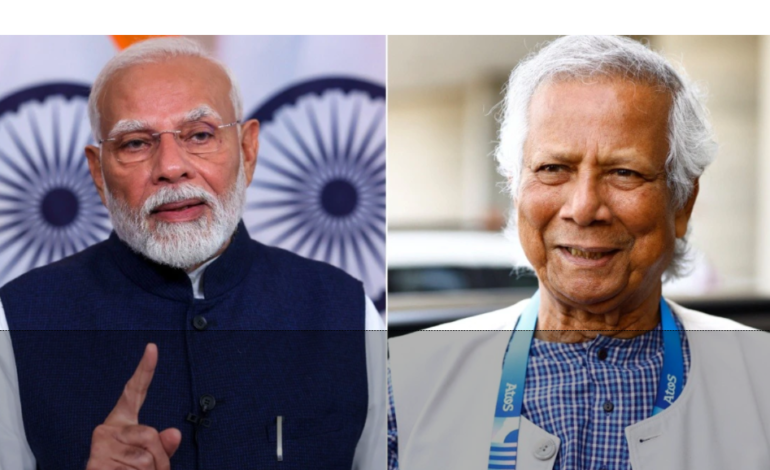
Bangladesh Hopes for Yunus-PM Modi Meeting During BIMSTEC Summit

The Bangladesh interim government, led by Muhammad Yunus, is set to attend the 6th Bay of Bengal Initiative for Multi-Sectoral Technical and Economic Cooperation (BIMSTEC) summit in Bangkok, Thailand, from April 2-4.
This raises hopes for the first-ever in-person meeting between Yunus and Indian Prime Minister Narendra Modi on the sidelines of the summit.
While nothing has been finalized yet, a Bangladeshi official told Prothom Alo that there is still a possibility for the two leaders to meet, taking advantage of the BIMSTEC platform.
Bangladesh will assume the role of the next BIMSTEC chair during the summit.
“As the chair, Bangladesh will have the opportunity to lead BIMSTEC, take initiatives for cooperation in different sectors by working together with all member states, and this will be an opportunity for Bangladesh to re-demonstrate its commitment to the world,” BIMSTEC Secretary-General Indra Mani Pandey was quoted as saying by The Dhaka Tribune.
Thailand is hosting the summit in Bangkok. BIMSTEC, a regional organization established in 1997 with the signing of the Bangkok Declaration, was initially known as BIST-EC (Bangladesh-India-Sri Lanka-Thailand Economic Cooperation). The group later expanded with the inclusion of Myanmar in December 1997 and Bhutan and Nepal in February 2004, leading to its current name, BIMSTEC.
Often considered an alternative to the South Asian Association of Regional Cooperation (SAARC), BIMSTEC gained momentum after SAARC became largely inactive. India has actively promoted BIMSTEC as part of Prime Minister Modi’s Act East Policy, which aims to enhance economic, strategic, and cultural ties across Southeast Asia.
The anticipated meeting between Yunus and Modi is significant given the rapid deterioration in India-Bangladesh relations following the removal of former Prime Minister Sheikh Hasina through an orchestrated coup on August 5 last year.
Hasina has since sought refuge in India, while Muhammad Yunus, as the Chief Advisor of Bangladesh’s interim government, now leads the nation. This transition has contributed to a sharp decline in Indo-Bangladeshi relations.
Widespread mob violence, vandalism, and the persecution of Hindus under the interim regime have further strained ties, leading to a diplomatic stalemate.
Against this backdrop, the BIMSTEC summit presents an opportunity to reset relations between India and Bangladesh and reduce diplomatic tensions.
However, much will depend on how the interim government addresses the restoration of democracy and the protection of minority rights.