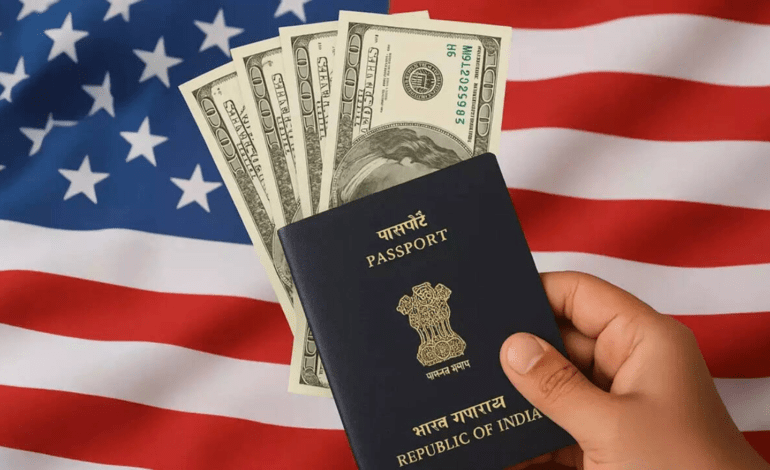
New $250 U.S. visa integrity fee will impact Indian tourists, students, and cultural visitors starting 2026

By: Staff Writer, IndoUS Tribune
A major shift is coming for international travelers to the United States — especially those from India. Beginning January 1, 2026, a new $250 “Visa Integrity Fee” will be imposed on all non-immigrant visa applicants, as mandated by the recently signed “One Big Beautiful Bill Act”, a sweeping immigration and national security legislation signed into law by President Donald J. Trump on July 4, 2025.
This mandatory, non-refundable fee adds a substantial cost burden on top of existing visa processing fees such as the MRV (Machine Readable Visa) fee, SEVIS fee (for students), and other consular charges.
How will this impact Indian visitors?
India is among the top five nations sending non-immigrant visa applicants to the U.S. This new fee is poised to have significant economic and cultural effects on Indian travelers across several categories:
Tourists (B-1/B-2 Visas)
- Families visiting for weddings, graduations, or holidays will now pay an additional $250 per traveler.
- For a family of four, that’s an added cost of $1,000 – a considerable sum for middle-class households.
- Senior citizens visiting children or grandchildren — a large demographic of Indian B-2 travelers — will be particularly affected, especially those on pensions or fixed incomes.
Students’ families
- Parents visiting children pursuing higher education in the U.S. will also be required to pay this fee, further increasing the financial burden already faced by Indian families sending students abroad.
- Combined with existing SEVIS and visa issuance fees, total upfront costs for a student visa journey may now range between $700–$900.
P-3 Visa holders: Cultural visitors
- The Integrity Fee will also apply to P-3 visa applicants, which include:
- Indian classical musicians
- Dance troupes
- Theater groups
- Community and temple festival performers
- These groups often travel for non-commercial purposes or are supported by nonprofit organizations, making the additional cost a potential deterrent to cultural exchange.
Wider implications for U.S. tourism revenue
The new fee may create a chilling effect on tourism from countries like India, Brazil, the Philippines, and Nigeria, which are not part of the U.S. Visa Waiver Program.
Cities such as New York, Chicago, San Francisco, and Orlando, which heavily benefit from Indian tourist spending in hospitality, retail, and air travel sectors, could see a noticeable dip in arrivals — especially with graduation season and summer travel spikes.
At a glance: Key stats from removed charts
- India is projected to contribute over $1.8 billion of the expected $9 billion in Integrity Fee revenue in the first fiscal year.
- Tourist visa cost for Indian applicants will increase from ~$185 to ~$435.
- For students, total visa-related expenses could approach $900.
Is the fee refundable?
According to early guidance:
- Refunds may be possible in rare cases — such as leaving the U.S. within 5 days of visa expiry without violating terms.
- However, no official refund mechanism has yet been released by the Department of Homeland Security (DHS)or Department of State.
- Until further notice, assume the fee is non-refundable.
Implementation timeline
- The $250 fee will take effect January 1, 2026, in line with the U.S. government’s fiscal year planning.
- Technical and procedural rollout is underway at consulates worldwide.
Political and diplomatic ramifications
While the “Visa Integrity Fee” is part of broader efforts to enforce immigration accountability and fund border infrastructure, it also:
- Risks damaging soft power and cultural diplomacy with major allies like India.
- May spark calls for reciprocal action or fee waivers in bilateral negotiations.
- Could impact long-term academic, professional, and cultural exchange programs.
What Indian travelers should do
- Plan ahead: Budget for the extra $250 per visa applicant.
- Stay informed: Watch DHS and U.S. Embassy in India for procedural updates.
- Avoid scams: Be cautious of fake refund agents or unofficial payment portals.
Final takeaway
The introduction of the Visa Integrity Fee will affect Indian tourists, students’ families, and cultural delegations in a direct and costly way. As the U.S. gears up for global events like the 2026 FIFA World Cup and 2028 Olympics, this policy risks undermining goodwill and people-to-people connections with one of its most significant international partners — India.
IndoUS Tribune will continue tracking developments, including any changes to the law or possible exemptions for select visa categories.
For questions or to share your experience as an Indian traveler navigating the new fee system, email us at editor@indoustribune.