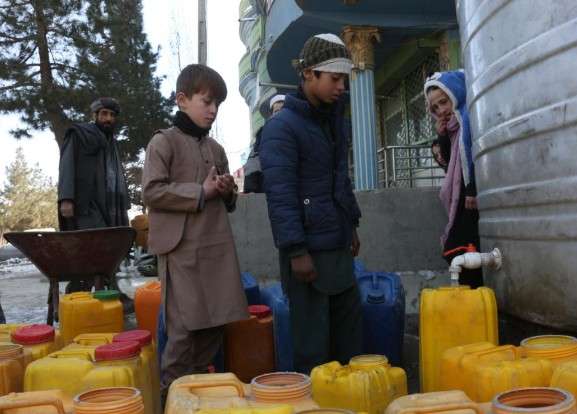
Kabul faces historic water crisis as residents plead for urgent action

A severe water crisis has gripped Afghanistan’s capital, Kabul, with nearly six million residents facing acute shortages, prompting widespread public outcry and urgent appeals to the Taliban-led interim government for action.
Local media reports reveal a sharp decline in water levels, particularly in the central and western parts of the city. Residents say access to water has become nearly impossible, forcing families, especially women and children, to search day and night for clean water.
“Without water, life becomes extremely difficult. If the petrol stations stop giving water, people will die of hunger and thirst,” said Kabul resident Mohammad Agha. Others echoed similar concerns, describing the situation as dire.
The United Nations Human Settlement Programme (UN-Habitat) has called the water crisis “unprecedented,” noting that groundwater extraction in Kabul far exceeds its natural recharge rate. Nearly half the city’s boreholes have already dried up, and up to 80% of the remaining groundwater is unsafe due to contamination from sewage, arsenic, and salinity.
UN-Habitat chief Stephanie Loose warned that Kabul could become the world’s first modern capital to run completely dry without urgent, coordinated investment in water infrastructure.
NGO Mercy Corps also reported that over two-thirds of Kabul’s households are in water-related debt, with some spending up to 30% of their income just to access clean water.
Residents are urging the interim government to invest in water infrastructure, including digging deeper wells and expanding supply networks. Experts emphasize that addressing this crisis will require significant collaboration, public awareness, and financial commitment.
The UN estimates that 21 million people across Afghanistan currently need water, sanitation, and hygiene support, with major cities like Kabul, Kandahar, and Herat all experiencing growing water scarcity.