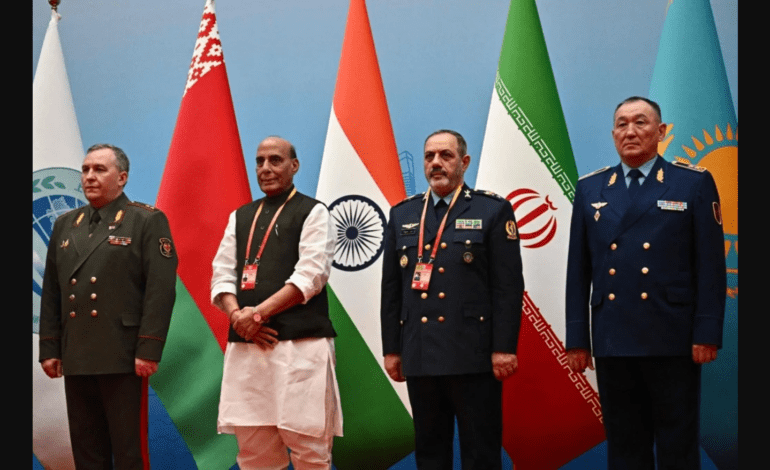
India and Pakistan share SCO stage amid tensions over Pahalgam attack

In a rare diplomatic moment following months of military tension, the foreign ministers of India and Pakistan appeared on the same platform at the Shanghai Cooperation Organisation (SCO) summit held on July 15 in Tianjin. While both leaders refrained from directly addressing each other, the specter of the Pahalgam terror attack and the subsequent four-day drone-and-missile exchange loomed heavily over the proceedings.
India’s External Affairs Minister S. Jaishankar used his address to call for an “uncompromising stance” on terrorism, urging SCO member states to uphold the organization’s founding principles. He described the Pahalgam attack as a “deliberate attempt to destabilize Jammu and Kashmir’s tourism economy and incite religious discord.” Jaishankar also cited the UN Security Council’s condemnation of the attack, which called for accountability of its perpetrators, organizers, and sponsors.
The UNSC statement has been repeatedly referenced by India to justify Operation Sindoor, a series of targeted cross-border strikes on terror infrastructure in Pakistan. The operation, which unfolded in May, led to a four-day military exchange involving armed drones and precision missiles, marking one of the most intense confrontations between the two nations in recent years.
Pakistan’s Foreign Minister Ishaq Dar, who also attended the summit, avoided direct mention of India but emphasized the need for regional stability and multilateral cooperation. According to reports, no bilateral meeting was scheduled between the two ministers.
The SCO summit, chaired by Chinese Foreign Minister Wang Yi, focused on regional security, economic development, and counterterrorism. Jaishankar’s remarks were echoed by other member states, who stressed the importance of collective action against terrorism, separatism, and extremism.
With the Council of Heads of State meeting scheduled for August 31–September 1 in Tianjin, the foreign ministers’ gathering laid the groundwork for what could be a pivotal moment in Indo-Pak relations and broader regional diplomacy.