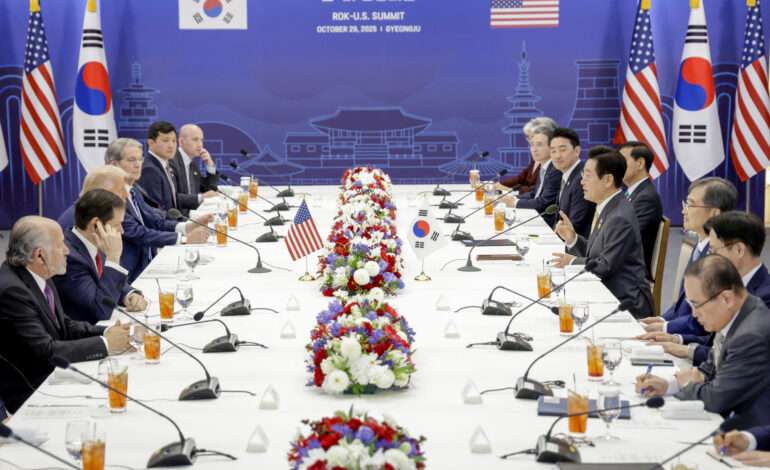
South Korea signals openness to revising nuclear pact with U.S. as talks advance on enrichment, reprocessing rights

South Korea is preparing for the possibility of revising its decades-old nuclear cooperation pact with the United States as both countries deepen consultations on expanding Seoul’s rights to enrich uranium and reprocess spent nuclear fuel for civilian purposes. The indication came from First Vice Foreign Minister Park Yoon-joo during a parliamentary hearing on Friday, marking a significant development in the ongoing bilateral strategic and energy dialogue.
Park addressed lawmakers during a session of the National Assembly’s Foreign Affairs and Unification Committee, where he highlighted that Seoul is closely monitoring the need for adjustments to the U.S.–South Korea “123 Agreement,” the legal framework that governs nuclear cooperation between the allies. His remarks follow a joint fact sheet issued earlier in the day by Washington and Seoul, in which the United States formally expressed support for enabling South Korea to secure civil uranium enrichment and spent fuel reprocessing capabilities under U.S. legal and treaty requirements.
According to the joint document, the United States “supports the process that will lead to the ROK’s civil uranium enrichment and spent fuel reprocessing for peaceful uses,” referring to South Korea by its official name, the Republic of Korea (ROK). The move is widely seen as a significant step forward for Seoul, which has long sought expanded nuclear fuel cycle rights to strengthen its energy security and reduce its reliance on imported processed fuel.
However, Vice Minister Park cautioned that meaningful implementation will require detailed negotiations and careful coordination. While the U.S. has signaled openness, revising the 123 Agreement involves complex procedural steps, including interagency consultations in Washington and domestic legal reviews in both countries. Park underlined that “additional steps should be taken, given the many aspects involved,” including the possibility of amending the pact to reflect expanded capabilities.
Responding to parliamentary questions about whether the two sides have reached agreement on formally revising the pact, Park said Seoul is “keeping an eye on” the potential revision while continuing technical and diplomatic discussions with its American counterparts. He emphasized that both nations share a “strong will” to implement the recent commitments on enrichment and reprocessing, though the process will take time due to regulatory and legal requirements.
As global energy markets shift and regional security dynamics intensify, South Korea’s move to enhance its nuclear fuel autonomy represents both a strategic priority and a major diplomatic undertaking. Analysts say the outcome of these negotiations will shape the future of Seoul’s civilian nuclear program and its long-term partnership with Washington.