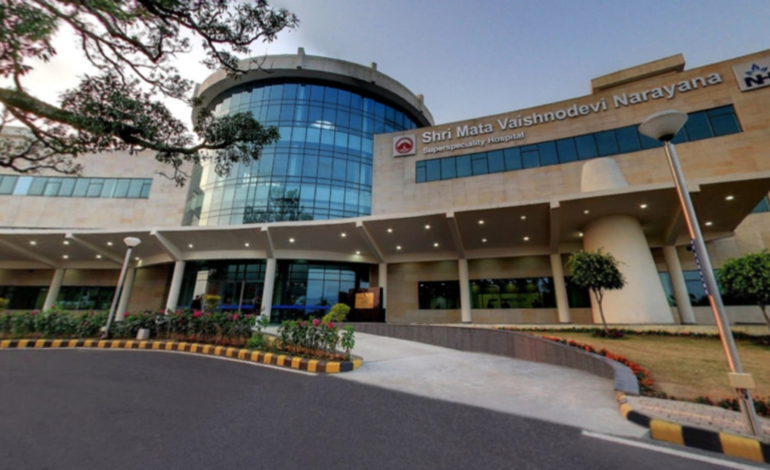
Hindu devotees express outrage over Vaishno Devi Shrine Board- funded medical college admissions

By: Dr Avi Verma
Over last month or so, a storm of outrage has erupted among Hindu devotees worldwide over the first MBBS admission list of the Shri Mata Vaishno Devi Institute of Medical Education (SMVDIME) in Jammu. Questions are being raised over the use of donations made by Hindu pilgrims for the education of students from other religions, with a highly disproportionate 42:8 ratio favoring Muslim students over Hindus.
The controversy began when SMVDIME released its admission list for the 2025–26 academic year, showing 42 seats allotted to Muslim students, 7 to Hindu students, and 1 to a Sikh. Given that the college is funded almost entirely through donations from devotees of the Vaishno Devi shrine, many Hindu organizations and devotees argue this constitutes a betrayal of the donors’ intent.
IndoUS Tribune reached out to the incoming CEO of the Shrine Board, Mr. Sachin Vaishya, and the former CEO, Mr. Anshul Garg, but received no response. A formal email was also sent to the Governor of Jammu & Kashmir, seeking clarification on the use of shrine funds, yet no response has been received.
Hindu organizations, including the VHP and Bajrang Dal, have raised strong objections, demanding a review of the admissions. Several delegations, including BJP leaders, have protested publicly, asserting that Hindu devotees who fund the Shrine Board should have a fair representation in the college admissions.
One question at the heart of the outrage is: Why can’t the allocation be 42 seats for the Hindu community and 8 for other communities, given that the funding is 100% from Hindu donations? Estimates indicate that contributions from the Muslim community to the Vaishno Devi shrine are negligible, less than 1%, if any. Critics argue that the current admission list disregards the religious identity of the donors and betrays the faith and trust of millions of Hindu devotees worldwide. The disproportionate allocation raises fundamental questions about fiduciary responsibility and the ethical use of shrine funds.
Officials and the administration defend the admissions as merit-based, conducted via NEET and JKBOPEE examinations. SMVDIME has not been granted minority status, which means legally, religion-based quotas cannot be imposed. However, Hindu organizations argue that merit-based admission rules must still respect the intent of the funding source, especially when the funding comes from a religious pilgrimage.
The controversy raises broader ethical and social questions:
- Should donations collected from devotees of a particular faith fund education for students outside that faith?
- Does the disproportionate representation violate the ethos of the shrine and the trust of Hindu pilgrims?
- How can institutions reconcile merit-based admissions with religious donor intent without violating constitutional provisions?
Internationally, this controversy touches on human rights and non-discrimination principles, including the UDHR and ICESCR, which emphasize equitable access to education. Yet, critics argue that ignoring the faith of donors while allocating seats overwhelmingly to another community undermines both ethics and social trust.
IndoUS Tribune stands in solidarity with the Hindu community worldwide, demanding immediate transparency and accountability from the Shrine Board and J&K authorities. Devotees are calling for corrective measures to ensure future admissions reflect both merit and the intent of donor communities, safeguarding the faith and goodwill of millions of Hindus who support the shrine.
The SMVDIME controversy underscores a growing tension in India: the delicate balance between secular merit-based admissions and religiously funded institutions. The case of the Vaishno Devi Medical College illustrates the urgent need for clear policies that protect donor intent, community trust, and equitable access to education.