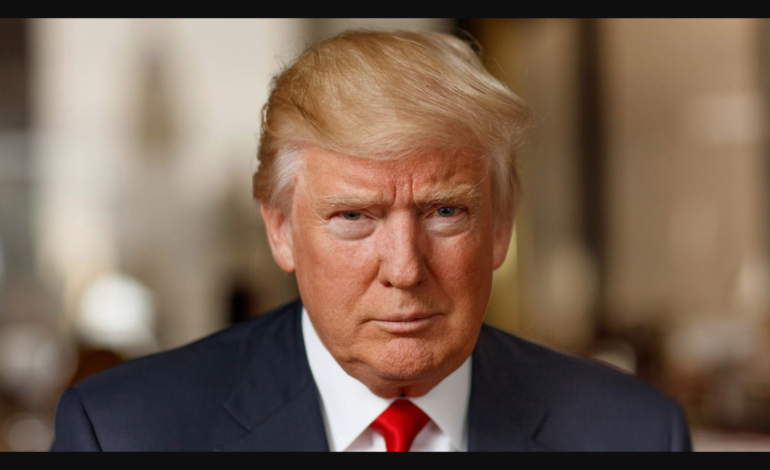
Trump unveils broad ‘America First’ vision in new national security strategy

The Trump administration has released a sweeping new National Security Strategy (NSS) that places the “America First” doctrine at the core of US foreign, defence, and economic policy. The 33-page document outlines a major reorientation of national priorities—emphasising border security, economic nationalism, reindustrialisation, and a sharper competitive posture toward China.
Introducing the strategy, President Donald Trump said his administration had acted “with urgency and historic speed” to restore American power globally. He claimed that no previous administration had engineered “so dramatic a turnaround in so short a period,” framing the new strategy as a roadmap to preserve the United States as “the greatest and most successful nation in human history.”
Reasserting sovereignty and border control
The strategy begins with an unambiguous assertion that the United States must remain an “independent, sovereign republic” whose government protects the natural rights of its citizens. It highlights border security, migration control, and oversight of transportation networks as fundamental responsibilities of the government. Nations, it says, must cooperate to reduce destabilising migration flows instead of enabling them.
Economic security as national security
A central pillar of the document is the argument that US economic vitality directly underpins national defence. The strategy calls for rebuilding the American industrial base, securing access to critical minerals, and reshoring vulnerable supply chains. It states that Washington must ensure the US “is never again dependent on an adversary for essential goods, materials, or components.”
Energy dominance is framed as a strategic priority. The document rejects global “Net Zero” commitments and climate-driven regulatory policies, calling them economically damaging and misaligned with America’s long-term national interests.
The report attributes China’s rise to decades of US engagement that strengthened Beijing while eroding the competitiveness of US manufacturing. It outlines a tougher economic posture toward China—targeting industrial subsidies, intellectual property theft, and Beijing’s bid to control advanced technologies and essential supply chains.
Indo-Pacific competition and India’s role
The Indo-Pacific is described as a primary “geopolitical battleground of the next century.” The strategy identifies India as a crucial partner in balancing Chinese influence and calls for deeper commercial, defence, and technological cooperation. Strengthening the Quad partnership with Australia, Japan, and India is positioned as a key component of regional security.
The document emphasises the need for a military able to “deny aggression anywhere in the First Island Chain,” with particular attention to Taiwan and the broader Pacific littoral. The administration also urges allies in East Asia to assume greater responsibility for regional defence, including expanding access to bases and raising defence spending.
Europe, Middle East, and Africa: recalibrated priorities
In Europe, the strategy warns of demographic decline, regulatory burdens, and political fragmentation. It argues for restoring stability on the continent, rebalancing transatlantic commitments, and avoiding what it calls NATO’s “perpetually expanding” mission orientation.
The Middle East, once the central focus of US foreign policy, is described as less strategically dominant due to increased American energy independence and recent regional normalisation efforts. Iran is portrayed as weakened following Israeli military actions and shifting regional alignments.
For Africa, the strategy calls for moving from aid-centric policies to trade-driven partnerships, especially in critical minerals, energy, and infrastructure—prioritising cooperation with governments open to US investment.
The NSS formalises the administration’s vision of an America that is economically self-reliant, militarily unmatched, and strategically focused on great-power competition, particularly with China.