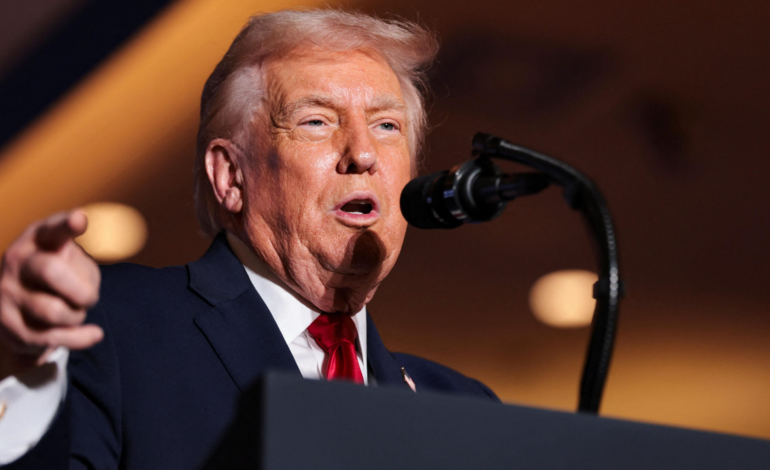
US policy oscillates between confrontation and conciliation toward India and China

The United States’ trade and strategic posture under President Donald Trump is increasingly defined by a sharp swing between pressure and partnership—particularly in its engagement with India and China. From oil purchases to agricultural exports, Washington has taken a hard line on any trade that could be perceived as undermining “MAGA” economic interests, even when the impacts are largely hypothetical.
India has already been hit with a punitive tariff for purchasing Russian oil that Washington considers “sanctioned,” taking the total reciprocal tariff burden to nearly 50 percent on several categories of goods. The US continues to push New Delhi to shift toward American oil, despite higher procurement costs, while simultaneously seeking more access for US farm products in India—a demand not equally reciprocated for Indian agricultural exports.
One of Washington’s main complaints involves rice. President Trump has repeatedly raised concerns that India is “dumping” rice in the US market, undercutting American farmers and depressing domestic prices. This narrative has led to the threat of fresh tariffs on Indian rice exports, aligning with longstanding complaints from US rice growers that imports from India, Thailand, and Vietnam distort competition.
Although India exported roughly 60.65 lakh tons of rice in 2024–25, only about 2.74 lakh tons were shipped to the US, making America a relatively small market. Analysts say that any steep tariff increase would likely have minimal impact on Indian exporters but could raise costs for American consumers, especially those who depend on premium basmati varieties.
Despite the trade headwinds, Washington’s latest strategic document underscores its desire for a deeper partnership with India. The “National Security Strategy of the United States of America, November 2025” highlights India’s role in preventing the domination of “any single competitor nation,” signaling continuity in Indo-Pacific security cooperation—including participation in the Quad with Australia, Japan, and the US.
The oscillation between confrontation and conciliation is even more visible in US-China relations. After threatening Beijing with tariffs as high as 130 percent and freezing trade dialogues, President Trump unexpectedly revived the notion of a “G2” partnership ahead of his October 30 meeting with Chinese President Xi Jinping in Busan. He posted on Truth Social that “THE G2 WILL BE CONVENING SHORTLY!” and later described the meeting as “great,” claiming it would bring “everlasting peace.”
The Busan summit produced several concessions, including China’s commitment to purchase more American soybean and a softening of restrictions on rare-earth exports. This selective engagement stood in contrast to the broader US policy framing China as Washington’s primary strategic competitor.
Recent moves—such as allowing limited AI chip exports under tight regulations—show that the White House is willing to pursue transactional cooperation even within a competitive framework.
These dual realities—tariffs and pressure juxtaposed with engagement and strategic outreach—define today’s triangular dynamic between Washington, New Delhi, and Beijing. They also illustrate the challenge of managing twin priorities: strengthening India as a long-term partner while containing China as a rival.
As Trump navigates this complex landscape, US policy continues to reflect a blend of economic nationalism, geopolitical calculation, and tactical flexibility—shaping one of the most consequential strategic relationships in Asia.