Indian American lawmakers call for balanced, forward-looking reset in US–India ties

Two influential Indian American lawmakers in the United States Congress, Rep. Ami Bera and Rep. Pramila Jayapal, have urged a more balanced, innovation-focused, and values-driven approach to US–India relations. Speaking at the House Foreign Affairs Subcommittee on South and Central Asia hearing, they highlighted the strategic, economic, and people-to-people dimensions of the partnership.
Rep. Ami Bera, a Democrat from California and one of the longest-serving Indian American members of Congress, emphasised the bipartisan support for the US–India strategic partnership. “We recently introduced a bipartisan resolution reflecting three decades of cooperation — from President Clinton to President Biden,” Bera said, noting that both countries seek “security, peace, and prosperity.”
During his recent visit to India, Bera observed growing strategic alignment. He pointed out that while India continues to manage relations with China, its long-term interests increasingly align with the United States and Europe. He also noted India’s openness to multinational investment, highlighting its role as a reliable partner in secure supply chains.
On defence, Bera underlined expanding maritime cooperation in the Indian Ocean and urged deeper joint training. “The maritime partnership between the United States and India is extremely strong. Both sides want more joint exercises to ensure freedom of navigation,” he said.
Bera also raised the politically sensitive issue of visa restrictions and scientific mobility, criticising the $100,000 H-1B fee as counterproductive. He called for a new visa category to enable Indian and US scientists to travel freely, which is crucial for collaboration in AI, biotechnology, health security, and advanced manufacturing.
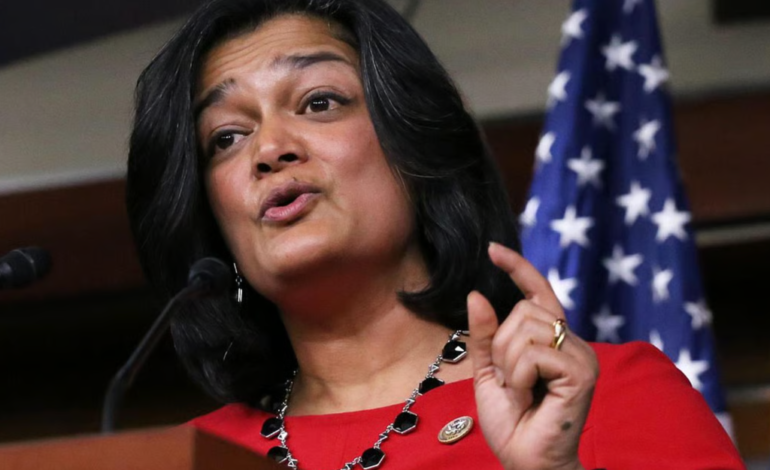
Rep. Pramila Jayapal, the first Indian American woman in Congress, highlighted the personal and economic stakes. “As someone who has lived the immigrant experience, I know restrictive immigration policies harm families, businesses, and our bilateral ties,” she said. Jayapal noted that tariff escalations threaten Indian American entrepreneurs, citing a fifth-generation family business describing current tariffs as “the greatest threat in over 120 years.”
She also addressed rising anti-Indian hate in the US, emphasising that Indian Americans are central to the economy, leading Fortune 500 companies, startups, and critical scientific research. Jayapal cautioned that punitive measures could push India toward alternative alliances such as BRICS or SCO, which could undermine US strategic interests.
Together, Bera and Jayapal framed a dual imperative: fortifying defence and technological collaboration while protecting democratic values, economic openness, and people-to-people ties. Their interventions underscored that the US–India partnership should be forward-looking, inclusive, and reflective of the experiences of millions of Indian Americans who act as a “living bridge” between the two nations.
The lawmakers’ remarks come at a critical time as both countries navigate strategic, trade, and technological challenges, highlighting the need for a partnership grounded in shared values and mutual prosperity.