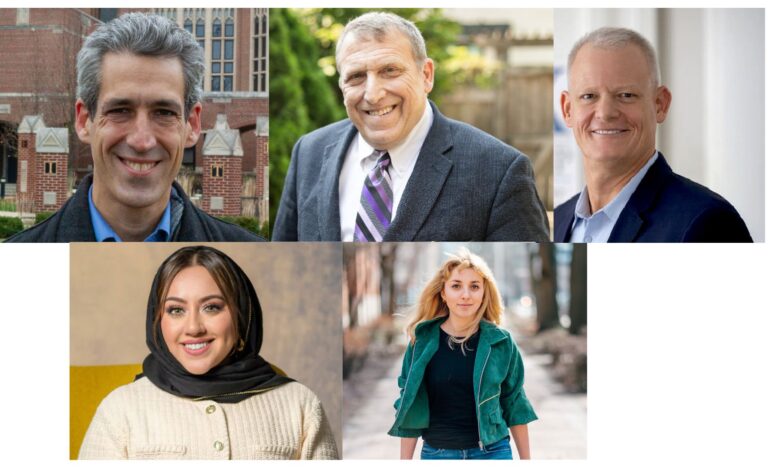
Illinois’ 9th Congressional District: An open seat, a crowded field, and a primary that will decide the future

For the first time in nearly three decades, Illinois’ 9th Congressional District is preparing to
elect a new representative without an incumbent on the ballot. Representative Jan
Schakowsky’s retirement after 14 terms marks the end of an era and opens the door to one of
the most competitive Democratic primaries in the state.
According to the nonpartisan Cook Political Report, IL-09 is rated “Solid Democratic.” In
practical political terms, this makes the March 17, 2026 Democratic primary the decisive
election, with the general election outcome all but predetermined.
As of early November 2025, 17 Democrats have filed for the primary. In such a fragmented
field, the winner is likely to emerge with a plurality rather than a majority, elevating the
importance of base mobilization, organizational discipline, and turnout strategy.
IL-09 is a complex district — spanning progressive Chicago neighborhoods, affluent North
Shore suburbs, immigrant communities, Jewish constituencies, younger activists, and older
professionals. No single ideological bloc dominates, and the eventual nominee will reflect which
coalition shows up to vote.
The leading contenders: Backgrounds, strengths, and challenges
(Note: IndoUS Tribune has met with and interviewed Bruce Leon, Phil Andrew, and Bushra
Amiwala as part of its community outreach and election coverage. Requests for interviews were
also extended to other leading candidates but did not receive a response as of publication.)
Daniel Biss The seasoned public servant
Daniel Biss brings a long résumé in Illinois public life. A former state legislator and now Mayor
of Evanston, Biss is well known across the North Shore and among politically engaged
Democrats. His career reflects a blend of policy depth, executive governance, and institutional
experience.
Strengths
High name recognition
Established donor networks
Seen as capable and steady by many older and moderate voters
Polling places him near the top tier of the race
Challenges
Must energize younger voters in a shifting electorate
Competes with multiple candidates occupying similar experience-based lanes
Faces skepticism from progressives seeking generational change
Overall
Biss represents continuity, experience, and managerial competence — assets in a crowded field,
but not without generational risk.
Kat Abughazaleh The digital-era progressive
Abughazaleh entered the race early and built momentum through grassroots organizing and
online fundraising. Her campaign reflects a new generation of progressive politics that prioritizes
small donors, activism, and rejection of corporate influence.
Strengths
Strong engagement among younger and progressive voters
Largest fundraising totals to date, driven by small donors
Clear ideological message and activist credibility
Challenges
Youth turnout is unpredictable
Less access to traditional political institutions
Must scale operations beyond digital enthusiasm
Overall
Abughazaleh embodies insurgent energy and generational change — powerful in a plurality race
if her base turns out.
Bruce Leon The pragmatic centrist
Bruce Leon is a longtime Chicago businessman and Democratic committeeperson who presents
himself as a results-oriented centrist. He emphasizes economic stability, practical governance,
and bipartisan sensibility.
Strengths
Significant personal financial resources
Clear appeal to moderate and business-minded Democrats
Emphasizes pragmatism over ideology
Challenges
Centrism can struggle to inspire turnout
Must build visibility across diverse communities
Risks dilution in a field with multiple establishment candidates
Overall
Leon offers financial strength and moderation — assets in a fractured race if ideological voters
split.
Phil Andrew
The public safety professional
A former FBI special agent and hostage negotiator, Phil Andrew brings a nontraditional
background to the race. He positions himself as a problem-solver shaped by real-world crisis
response rather than political institutions.
Strengths
Unique professional credentials
Resonates with voters concerned about public safety and stability
Growing fundraising capacity
Challenges
Limited name recognition
Must broaden policy agenda beyond public safety
Needs rapid organizational growth
Overall
Andrew represents a credible outsider alternative, appealing to voters seeking competence over
ideology.
Bushra Amiwala
The civic engagement and generational voice
Bushra Amiwala is known for youth organizing and advocacy centered on inclusion, education,
housing, and democratic participation. Her campaign emphasizes representation for younger
voters, women, and immigrant communities.
Strengths
Authentic connection with younger and first-time voters
Strong emphasis on civic participation and equity
Brings generational contrast to the field
Challenges
Lower fundraising compared to top-tier candidates
Limited district-wide name recognition
Structural barriers common to grassroots campaigns
Overall
Amiwala adds an important generational and civic perspective and could influence turnout
dynamics even beyond vote totals.
What will decide this race
Several forces will shape the outcome:
Turnout over persuasion: This race will be won by mobilization.
Vote fragmentation: A candidate could win with just over 20%.
Generational divide: Younger vs. older Democratic voters.
Organization and endorsements: Ground game matters more than ads.
Coalition-building: Geography, ideology, and identity must intersect.
Why this primary matters — especially for immigrant and community voters
For IndoUS Tribune readers and community stakeholders, this election is a rare opportunity.
With no incumbent and a crowded field, every organized community vote matters more than
usual.
Waiting until November will be too late.
The decision will already be made in March.
This race is not just about ideology — it is about representation, lived experience, leadership
style, and who reflects the future of IL-09.
Pay attention now. Ask questions. Engage early.
Because in this race, participation is power.