Putin calls EU attempts to seize Russian assets “robbery,” warns of eurozone fallout

Russian President Vladimir Putin on Friday strongly criticized the European Union’s efforts to seize frozen Russian assets, calling the move “robbery” and warning that it could severely damage trust in the eurozone and Europe’s financial credibility.
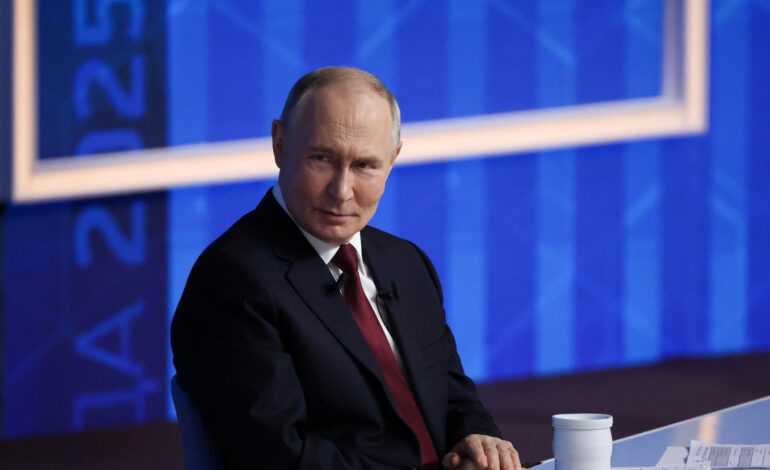
Speaking during his annual televised question-and-answer session and year-end press conference, titled Results of the Year, Putin rejected claims that the asset seizure could be justified under international norms. “Theft is not the correct term here,” he said, according to Russia’s state-run Tass news agency. “Theft implies secrecy. What they are attempting is open confiscation. That is robbery.”
Putin cautioned that forcibly transferring Russian assets would have far-reaching consequences beyond Moscow’s dispute with the West. He argued that such actions could erode confidence in European financial institutions, particularly among countries that hold reserves within EU jurisdictions.
“This is not just damage to their image,” Putin said. “It is a breakdown of trust in the eurozone. Russia is not the only country that keeps gold and foreign exchange reserves in Europe. Many other nations also do so. They will draw conclusions from what they see.”
Russian assets worth hundreds of billions of euros have been frozen in Europe since the outbreak of the Ukraine conflict in 2022. While the EU has so far limited itself to using interest earned on these assets to support Ukraine, discussions over outright confiscation or using the assets as collateral for loans have sparked legal and political controversy within the bloc.
Those divisions were evident this week as European Union leaders failed to reach consensus on a proposed reparations loan for Ukraine backed by immobilized Russian central bank assets. Instead, EU leaders agreed to raise approximately 90 billion euros in joint debt to support Ukraine over the next two years, covering 2026 and 2027.
According to European media reports, Hungary, the Czech Republic, and Slovakia declined to participate in the joint borrowing scheme. The talks stalled primarily over Belgium’s demand for unlimited legal guarantees before allowing the use of Russian assets held within its financial system. Belgium hosts a large share of the frozen Russian funds through the Brussels-based clearing house Euroclear.
German Chancellor Friedrich Merz reportedly spearheaded efforts to secure the reparations loan but was unable to overcome concerns from several member states about legal risks and potential retaliation.
Following the summit in Brussels, European Commission President Ursula von der Leyen said the EU’s primary objective—ensuring continued financial support for Ukraine—had been achieved, even without the reparations loan mechanism. Danish Prime Minister Mette Frederiksen echoed that sentiment, stating, “The bottom line is that our support for Ukraine is guaranteed.”
Hungarian Prime Minister Viktor Orban reiterated his opposition to EU financial assistance for Ukraine, criticizing Brussels’ handling of the conflict and warning against deeper economic entanglement.
For Moscow, the debate reinforces long-standing warnings that Western financial systems can no longer be trusted as neutral custodians of sovereign assets. Putin has repeatedly argued that asset seizures would accelerate efforts by Russia and other countries to move reserves away from Europe and toward alternative financial systems.
As the war in Ukraine continues, the issue of frozen Russian assets remains a flashpoint—testing not only EU unity but also the foundations of international financial trust.