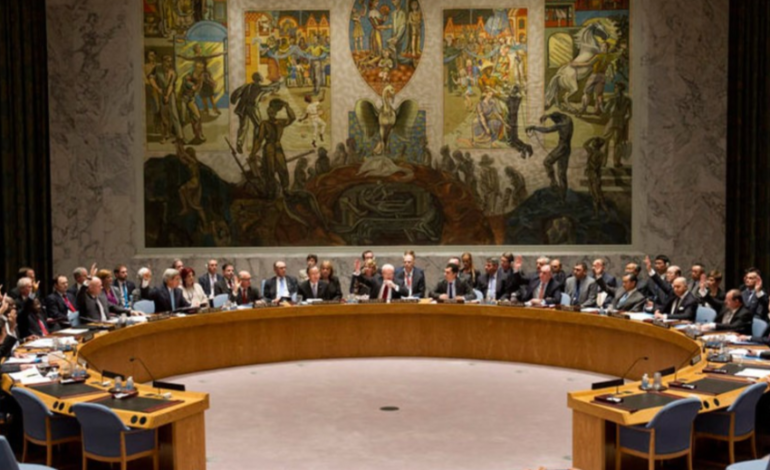
US and Venezuela clash at UN Security Council as maritime tensions escalate

The United States and Venezuela confronted each other sharply during an emergency meeting of the United Nations Security Council, as tensions escalated following Washington’s seizure of Venezuelan oil shipments and efforts to intercept additional tankers bound for the Latin American nation.
US Permanent Representative Mike Walz defended the actions, stating that Washington would “impose and enforce sanctions to the maximum extent” to cut off resources allegedly used by President Nicolás Maduro’s government to finance drug cartels and transnational criminal networks. He described sanctioned oil tankers as the “primary economic lifeline” sustaining what he termed Maduro’s “illegitimate regime,” justifying the ongoing US maritime blockade ordered by President Donald Trump.
Venezuela’s Permanent Representative Samuel Moncada rejected the accusations outright, denying any involvement by his country in international drug trafficking or the export of criminal gangs to the United States. He accused Washington of crossing a dangerous threshold, calling the seizures a “massive violation of international law” and an act of “piracy.”
“A red line has been crossed,” Moncada told the Council, adding that Venezuela would remain composed while firmly defending its sovereignty and peace.
The confrontation gained a broader geopolitical dimension as China and Russia rallied behind Venezuela. One of the seized vessels was reportedly transporting Venezuelan oil to China, prompting Beijing’s Deputy Permanent Representative Sun Lei to condemn US actions as a serious infringement on national sovereignty and a violation of the UN Charter and international law.
Russia’s Permanent Representative Vasily Nebenzia echoed those concerns, criticising what he described as Washington’s “cowboy-like conduct,” which he said runs counter to established norms of international law.
Several Council members expressed concern over President Maduro’s record on human rights, including allegations of election fraud and the suppression of political opponents. However, many also voiced reservations—directly or indirectly—about the legality of US actions.
Britain’s Deputy Permanent Representative Archie Young underscored the importance of the UN Convention on the Law of the Sea, calling it the cornerstone of ocean governance and stressing the need to uphold international law. France’s Deputy Permanent Representative Jay Dharmadhikari similarly reaffirmed his country’s commitment to sovereignty and territorial integrity, noting that efforts to combat drug trafficking must comply with international legal standards.
UN Assistant Secretary-General Khaled Khiari, briefing the Council, said the US has sunk 29 suspected drug-smuggling boats since launching Operation Southern Spear in September. According to UN data, at least 105 people have been killed in these strikes. Khiari cited UN High Commissioner for Human Rights Volker Türk, who warned that US airstrikes on boats allegedly linked to drug trafficking violate international human rights law.
Khiari also highlighted the worsening humanitarian situation inside Venezuela, noting increasing militarisation of public life, persistent human rights concerns, and severe socioeconomic challenges. With soaring inflation and currency instability, he said millions of Venezuelans are struggling to meet basic needs. Recent air and maritime restrictions, combined with declining exports, risk further limiting the government’s ability to deliver essential public services.
Secretary-General António Guterres, Khiari added, has welcomed offers of mediation and proposals aimed at achieving a peaceful resolution to the crisis.
Walz, aligning with the Trump administration’s framing, maintained that the maritime operations are central to the US-led war on drugs. He warned that powerful cartels, including Cartel de los Soles and Tren de Aragua—both designated by Washington as foreign terrorist organisations—pose a serious threat not only to the Americas but also to Europe.
While many European members acknowledged the transnational drug threat, they stopped short of endorsing the sinking of vessels, reflecting growing unease over the balance between security objectives and adherence to international law.