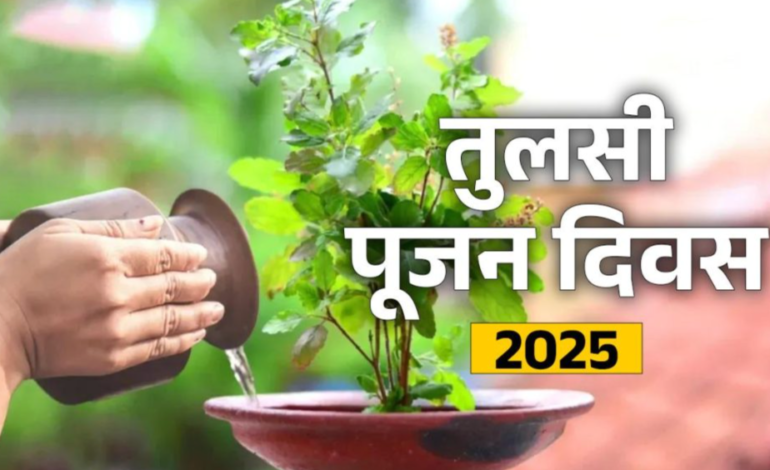
Tulsi Pujan Diwas Honoring sacred basil, spirituality and nature every Christmas Day

While December 25 is celebrated globally as Christmas, many Hindus also observe Tulsi Pujan Diwas, a day devoted to worshipping the Tulsi plant, or holy basil, which is seen as a symbol of purity, protection, and spiritual well‑being. The observance became widely promoted starting in 2014 by religious groups aiming to highlight Tulsi’s spiritual, medicinal, and ecological importance. In Hindu belief, Tulsi is deeply revered as beloved by Lord Vishnu and Goddess Lakshmi, and worshipping the plant is believed to bring peace, prosperity, and positive energy into the home.
This year, Tulsi Pujan Diwas fell on Thursday, a day considered particularly auspicious in Hindu tradition. Devotees began celebrations early, bathing, wearing clean clothes, and decorating their Tulsi plants with flowers and rangoli. Many households offered water, rice, and sweets while chanting mantras like “Om Tulasye Namah” and performing parikrama, walking around the plant three or seven times to invite blessings. Lamps were lit near the plant to dispel negative energy, and families gathered to share prasad and sing devotional songs.
Across India, homes and temples saw people planting new Tulsi saplings and offering garlands, reflecting both devotion and environmental respect. In many communities, the celebration also included distributing Tulsi plants to neighbors and visitors, emphasizing a collective reverence for nature’s gifts. Through these rituals, devotees connected spiritual practice with gratitude for the healing and cleansing qualities of Tulsi, uniting households in reflection, harmony, and cultural affirmation at the year’s end.