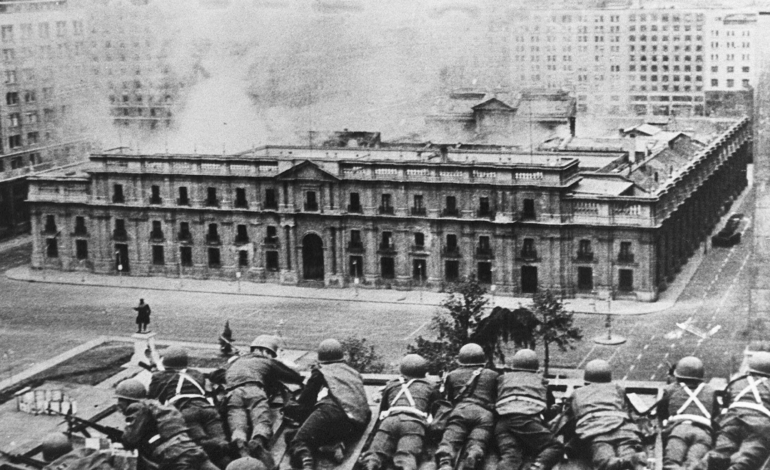
How the US Church Committee exposed the CIA’s role in Chile’s 1973 coup

Fifty years ago, a landmark investigation by the US Congress fundamentally altered how Americans viewed covert foreign interventions, exposing the depth of CIA involvement in Chile and setting new standards for intelligence oversight. The inquiry, led by Senator Frank Church, marked the first time lawmakers publicly examined secret intelligence operations aimed at destabilizing a democratically elected government.
The focus of the hearings was Chile, where Socialist leader Salvador Allende was elected president in 1970. Church, an Idaho Democrat, said the investigation was necessary because “the American people must know and be able to judge what was undertaken by their government in Chile,” calling the matter one of enduring public concern.
Alongside the hearings, the Senate committee released a comprehensive report titled “Covert Action in Chile, 1963–1973,” drawing on Top Secret CIA documents. The findings revealed that US covert operations in Chile were “extensive and continuous” over a decade. Initially, the CIA sought to prevent Allende from winning the presidency. After his election, the agency shifted tactics toward undermining his government and encouraging political instability.
The committee concluded that covert action carries significant moral and strategic costs and should be reserved for situations involving “severe threats” to US national security. In Chile’s case, lawmakers questioned whether such a threat ever existed, warning that intervention had consequences far beyond its stated objectives.
Newly declassified documents released on the anniversary highlight the resistance the investigation faced from within the US government. During the Ford administration, senior officials worked to delay and restrict congressional access to sensitive records. Former Secretary of State Henry Kissinger instructed aides to deny requests for State Department cables, urging that refusals come from the White House.
The CIA, White House, and State Department cited administrative delays and staffing shortages to slow cooperation. Former CIA Director William Colby later testified that the agency had been explicitly instructed not to comply fully with congressional demands.
The White House also invoked executive privilege to withhold critical documents, including National Security Council records from November 1970. Among the suppressed materials were handwritten notes by then–CIA Director Richard Helms, which recorded President Richard Nixon’s directive to prevent Allende from consolidating power.
The committee also uncovered evidence that the CIA withheld records related to payments made to individuals linked to the killing of Chilean army commander Gen. René Schneider, a key opponent of military intervention in Chilean politics.
As the inquiry neared completion, President Gerald Ford intervened, urging that certain findings—particularly those related to assassination plots—remain classified. Despite intense pressure, the committee pressed forward, releasing its report on CIA assassination activities and holding public hearings on Chile in late 1975.
Analysts later described the Church Committee as a historic turning point. The investigation not only exposed past abuses but also reinforced the principle that classified intelligence records belong to the government as a whole—not solely to the executive branch.
The Chile inquiry ultimately led to the creation of permanent congressional intelligence oversight committees, ensuring greater accountability. Half a century later, the Church Committee’s work remains a defining example of democratic oversight confronting the hidden reach of covert power.