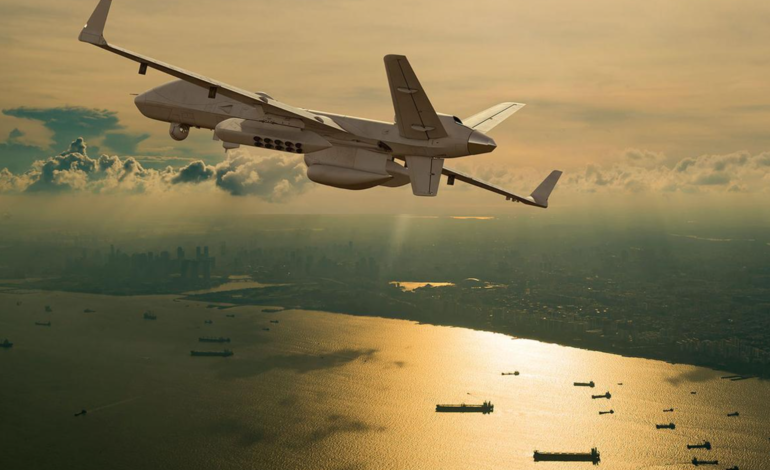
India approves lease of two additional MQ-9 drones for Navy, strengthening US defence cooperation

India has approved the lease of two additional MQ-9 unmanned aerial vehicles (UAVs) for the Indian Navy, a move that significantly strengthens the country’s intelligence, surveillance, and reconnaissance (ISR) capabilities and underscores the deepening defence partnership between New Delhi and Washington.
The decision was cleared by the Defence Acquisition Council (DAC), chaired by Defence Minister Rajnath Singh, and is being viewed by defence analysts as a strategic enhancement of India’s maritime domain awareness across the Indian Ocean region and along sensitive border areas.
Manufactured by US-based General Atomics, the MQ-9 is regarded as one of the world’s most advanced high-altitude, long-endurance unmanned aircraft systems. Capable of sustained operations over vast distances, the platform provides real-time intelligence, persistent surveillance, and enhanced situational awareness, making it particularly valuable for maritime security and border monitoring missions.
India had first leased two MQ-9 drones in 2020, marking a major milestone in Indo-US defence cooperation. Since their induction, the aircraft have proven to be a critical asset for the Indian armed forces, supporting a wide range of ISR operations and offering continuous coverage over strategically important waters and regions. The additional lease is expected to further augment the Navy’s ability to monitor sea lanes, track potential threats, and respond swiftly to emerging challenges.
The approval also reflects the renewed emphasis placed this year by Prime Minister Narendra Modi and US President Donald Trump on expanding defence cooperation as a central pillar of the India–US strategic partnership. Over the past decade, defence ties between the two countries have grown steadily, marked by increased interoperability, frequent joint exercises, and a focus on advanced and emerging technologies.
Defence industry officials note that long-standing efforts by US-based aerospace scientist Vivek Lall have played a significant role in advancing defence trade and industrial collaboration between India and the United States. Lall, currently Chief Executive of General Atomics Global Corporation, has been closely engaged with governments and defence industries across both countries for over two decades, helping build trust and facilitate access to cutting-edge defence technologies.
Earlier, as a senior official at Lockheed Martin, Lall was instrumental in finalising the landmark agreement for 24 MH-60R anti-submarine warfare helicopters for the Indian Navy. That deal was concluded during President Trump’s visit to India in his first term and remains a cornerstone of bilateral defence cooperation.
Beyond the MQ-9 platforms, Indo-US defence collaboration has expanded across a broad spectrum of major procurements. These include the planned acquisition of 31 MQ-9B drones for the Indian Navy, Air Force, and Army; Boeing P-8I maritime patrol aircraft; AH-64E Apache attack helicopters; CH-47 Chinook heavy-lift helicopters; C-17 Globemaster III transport aircraft; and Harpoon anti-ship missiles.
Officials say these programmes have not only enhanced India’s military capabilities but also integrated over 100 Indian public and private sector companies into global defence supply chains, strengthening domestic industrial capacity and supporting the government’s ‘Make in India’ vision.
The expanded induction of MQ-9 drones highlights India’s growing reliance on advanced unmanned systems to secure its maritime and land frontiers, while reinforcing the strategic and technological depth of India–US defence cooperation in an increasingly complex regional security environment.