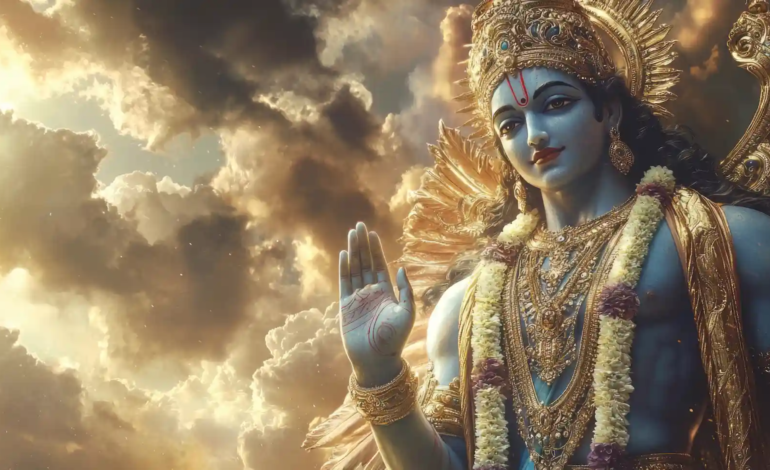
Gita Swadhyay – My understanding, chapter 18: Moksha Sannyasa Yoga (Part 1)

Dear Readers,
We have now reached the final chapter of the Bhagavad Gita, known as the Moksha Sannyasa Yoga. This chapter encapsulates the essence of the entire Gita, providing the fullest possibility of liberation (moksha). To aid comprehension, this chapter has been divided into two parts. Listening to its wisdom removes delusion, just as it did for Arjuna.
Arjuna’s Clarity
Naṣṭo mohaḥ smṛtir-labdhā tvatprasādān mayācyuta |
Sthito’smi gata-sandehaḥ kariṣye vacanaṁ tava ||
Translation:
Arjuna said – O Achyuta! By Your grace, my delusion is destroyed and I have regained my memory. I am now firm and free from doubt, and will act according to Your command.
Commentary:
At the end of this chapter, Sanjaya declares that wherever Yogeshwar Krishna is present, victory and glory naturally follow. Arjuna’s attachment and confusion have been completely dispelled.
Understanding Renunciation and Abandonment
Sannyāsasya mahābāho tattvam icchāmi veditum |
Tyāgasya ca hṛṣīkeśa pṛthak keśiniṣūdana ||
Translation:
O mighty-armed Krishna, I wish to understand clearly the essence of renunciation (sannyasa) and the difference between renunciation and abandonment of desire (tyaga).
Commentary:
Krishna explains that giving up worldly desires such as wealth, family, or sensual pleasures can be called sannyasa. Meanwhile, some scholars define tyaga as abandoning attachment to the results of actions. Krishna emphasizes that both complement each other, but the importance of tyaga is greater.
The Essence of Karma Yoga
Karmaṇyevādhikāras te mā phaleṣu kadācana |
Mā karma-phala-hetur bhūr mā te saṅgo’stvakarmaṇi ||
Translation:
You have the right to perform your prescribed duty, but you are not entitled to the fruits of action. Never let the fruit of action be your motive, nor let your attachment be to inaction.
Commentary:
Karma is indispensable for life. Duties performed selflessly, without attachment to results, purify the mind and benefit society. Actions performed with desire for fruits fall under rajasik, while inactivity or ignorance is tamasik.
The Threefold Classification of Action
Aniṣṭam iṣṭaṁ miśraṁ ca trividhaṁ karmaṇaḥ phalam |
Bhavaty atyāgināṁ pretya na tu sannyāsināṁ kvacit ||
Translation:
The results of actions—good, bad, or mixed—follow the renunciates (those who renounce selfish desire), but not the sannyasis (those who renounce action completely).
Commentary:
Krishna explains that karma yields fruits—good or bad. Some are enjoyed in this life, others carry over to the next. A yogi performing duty without attachment and offering results to the Divine attains freedom from outcomes.
The Three Types of Renunciation
Mukta-saṅgo’nahaṁvādī dhṛty-utsāha-samanvitaḥ |
Siddhy-asiddhyor nirvikāraḥ kartā sāttvika ucyate ||
Translation:
The doer who is free from attachment, without ego, endowed with patience and enthusiasm, and unmoved by success or failure, is called sattvic.
Rāgī karma-phala-prepsur lubdho hiṁsātmako’śuciḥ |
Harṣa-śokānvitaḥ kartā rājasaḥ parikīrtitaḥ ||
Translation:
The person attached to the fruits of action, greedy, violent, impure, and swayed by joy and sorrow is called rajasic.
Ayuktaḥ prākṛtaḥ stabdhaḥ śaṭho naiṣkṛtiko’lasaḥ |
Viṣādī dīrgha-sūtrī ca kartā tāmasa ucyate ||
Translation:
The one who is unbalanced, ignorant, stubborn, deceitful, lazy, destructive, and melancholic is called tamasic.
The Threefold Classification of Intellect
Pravṛttiṁ ca nivṛttiṁ ca kāryākārye bhayābhaye |
Bandhaṁ mokṣaṁ ca yā vetti buddhiḥ sā pārtha sāttvikī ||
Translation:
O Partha! The intellect that correctly understands what is to be done or not done, what is to be feared or not feared, and what binds or liberates, is considered sattvic.
Yayā dharmam adharmaṁ ca kāryaṁ cākāryam eva ca |
Ayathāvat prajānāti buddhiḥ sā pārtha rājasī ||
Translation:
O Partha! The intellect that cannot properly discern dharma from adharma, or what should be done and what should not, is called rajasic.
Adharmaṁ dharmam iti yā manyate tamasāvṛtā |
Sarvārthān viparītāṁś ca buddhiḥ sā pārtha tāmasī ||
Translation:
O Arjuna! The intellect veiled by tamas perceives unrighteousness as righteousness and interprets all things in reverse—such intellect is called tamasic.
Commentary:
Krishna reiterates the importance of performing duty selflessly, understanding the types of renunciation, and recognizing the threefold nature of action, desire, and intellect. Arjuna, the great warrior, sheds all delusions and gains clarity, demonstrating the transformative power of knowledge.
Conclusion of Part 1:
This first part of Chapter 18 has already shown the core of karma yoga, renunciation, and intellect, helping a reader to distinguish purity from attachment, and action performed for the Divine from selfish motivation. Arjuna’s confusion is removed, setting the stage for the complete understanding of moksha.