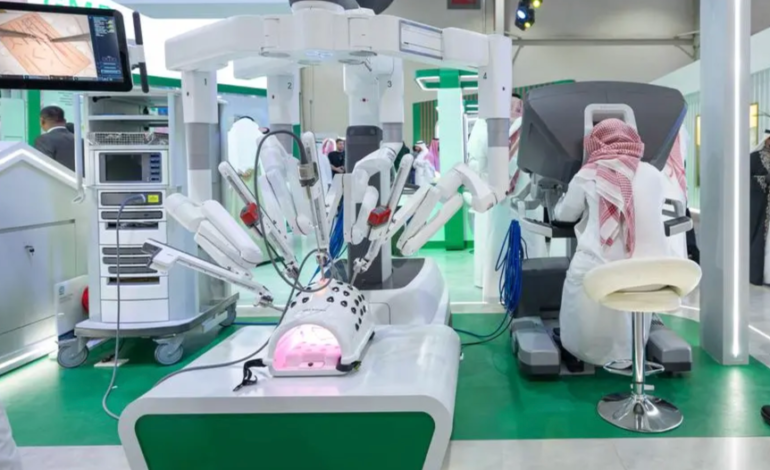
Satellite-enabled robotic surgery: A new frontier in global healthcare

By: Dr. Avi Verma
In a development that once belonged to the realm of science fiction, Chinese surgeons have recently demonstrated the feasibility of performing highly complex robotic liver surgeries over thousands of miles using satellite communication. This achievement marks a significant milestone in telemedicine and raises important possibilities for the future of advanced surgical care in remote and underserved regions.
The breakthrough
The procedures were conducted using a robotic surgical system controlled remotely via the Apstar-6D geostationary communication satellite. Surgeons operating from Lhasa successfully performed liver procedures on patients located in Beijing, a distance exceeding 5,000 kilometers (over 3,100 miles). According to reports, the surgeries were completed with minimal blood loss and without major complications, highlighting both technical feasibility and clinical safety.
The surgical team was led by Professor Rong Liu, a senior surgeon associated with China’s leading medical institutions. The cases involved complex hepatobiliary interventions—among the most technically demanding procedures in modern surgery—making the success particularly noteworthy.
Overcoming the latency challenge
One of the greatest barriers to satellite-based surgery is signal latency. Unlike fiber-optic or 5G networks, satellite links—especially those using geostationary satellites—introduce noticeable delays due to the vast distances signals must travel.
To address this, the surgical system reportedly employed:
- Adaptive latency compensation algorithms
- Intelligent bandwidth management
- Dual-link backup communication systems
Despite delays measured in hundreds of milliseconds, the robotic platform maintained stable control and high precision, demonstrating that latency—while still a concern—may no longer be an insurmountable obstacle for remote surgery.
Why this matters
The implications of this achievement extend far beyond technological novelty:
- Access to expertise: Highly specialized surgeons could potentially operate on patients in remote or disaster-affected areas without physical travel.
- Emergency care: In military, space, maritime, or rural settings, life-saving surgical intervention could be delivered where no specialist is available on site.
- Global health equity: Countries and regions with limited access to advanced surgical care may one day benefit from real-time expertise across borders.
While remote robotic surgery has previously been demonstrated using terrestrial networks, the successful use of satellite communication significantly expands the geographic reach of such interventions.
Proceeding with caution
Despite the excitement, experts caution against overstating the immediate impact. Satellite-enabled robotic surgery remains highly experimental and resource-intensive. Issues such as cost, cybersecurity, regulatory approval, liability, and patient safety standards will need rigorous evaluation before widespread adoption.
Furthermore, while current demonstrations span thousands of miles, claims about routine global or interplanetary surgery remain speculative. Large-scale clinical trials, standardized protocols, and independent validation will be essential before this technology becomes mainstream.
Looking ahead
This milestone represents a meaningful step toward a future where geography may no longer dictate access to advanced medical care. As robotic systems, artificial intelligence, and communication technologies continue to converge, satellite-assisted surgery could one day become an important tool in the global healthcare ecosystem.
For now, the achievement stands as a powerful reminder of how innovation—when guided by clinical rigor—can redefine the boundaries of medicine.
Disclaimer
This article is intended for informational purposes only and does not constitute medical advice. The procedures discussed are experimental and not yet part of routine clinical practice. Patients should consult qualified healthcare professionals for diagnosis and treatment decisions.