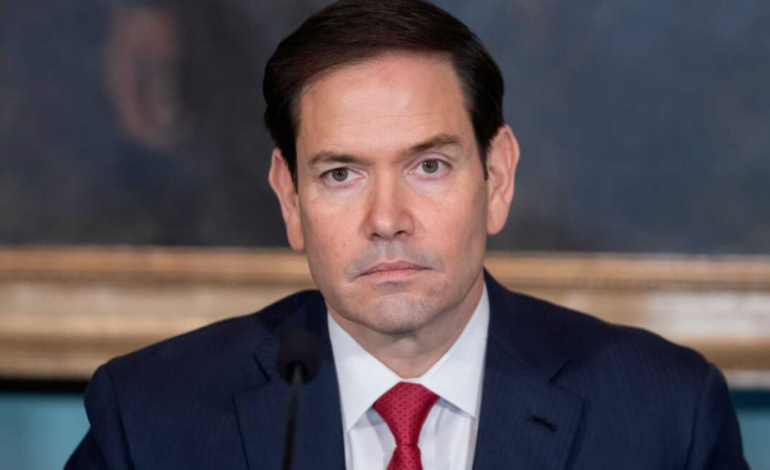
Rubio says Trump wants to buy Greenland, not seize it, amid Arctic tensions

US Secretary of State Marco Rubio has told lawmakers that President Donald Trump’s interest in Greenland is focused on acquiring the Arctic territory through negotiation rather than military force, according to multiple reports citing a closed-door briefing on Capitol Hill. Rubio’s remarks come amid heightened international concern over the US push to gain greater influence over the strategic island.
In the briefing with congressional leaders, Rubio sought to calm fears that recent tough rhetoric from the White House signalled an imminent US military move against Denmark’s semi-autonomous territory. He emphasised that the administration’s primary objective is to pressure Denmark into talks about a potential purchase of Greenland, not to launch an invasion.
Rubio’s comments were made against the backdrop of unusually forceful public statements by President Trump and some senior advisers, who have repeatedly refused to fully rule out military force as part of their strategy. White House press officials have said Trump regards Greenland as a critical national security priority due to its strategic location in the Arctic and growing great-power competition with Russia and China.
Trump has argued publicly that US involvement in Greenland would enhance Arctic defence and provide a buffer against rival powers. He has linked the island’s importance to broader US interests in Arctic security and access to strategic resources. However, Rubio’s briefing underlined that Washington prefers a negotiated deal and does not currently plan to seize the territory by force.
Concerns over the Greenland push have spread quickly among lawmakers and allied governments. Senate Minority Leader Chuck Schumer had raised questions about whether the administration’s actions could escalate to military confrontation—not only in Greenland but potentially elsewhere in the Western Hemisphere. Rubio’s assurances were interpreted as an attempt to reassure lawmakers that diplomacy remains the preferred route.
Despite these explanations, the administration has sent mixed signals. Some White House aides have publicly declined to dismiss the military option entirely, fuelling unease among allied nations. Statements from officials like Stephen Miller suggested that a forceful acquisition could be employed if diplomatic efforts fail—even though such moves would likely clash with international norms and alliance commitments.
The Trump administration’s renewed focus on Greenland has drawn strong pushback from European partners. Danish leaders have reiterated that Greenland is not for sale and that any future negotiations must respect Danish sovereignty and the wishes of Greenland’s own people. NATO allies have warned that any attempt to forcibly seize territory from a partner nation would harm transatlantic unity and potentially jeopardise the alliance itself.
Public opinion in Greenland also opposes becoming part of the United States, adding another layer of difficulty to Trump’s ambitions. Polls show most residents want to remain connected to Denmark, highlighting the political sensitivity of any acquisition attempt.
Rubio’s briefing suggests that the administration is aware of these geopolitical and diplomatic challenges, and prefers negotiation and purchase discussions as possibilities—even while Washington keeps other strategic options on the table.