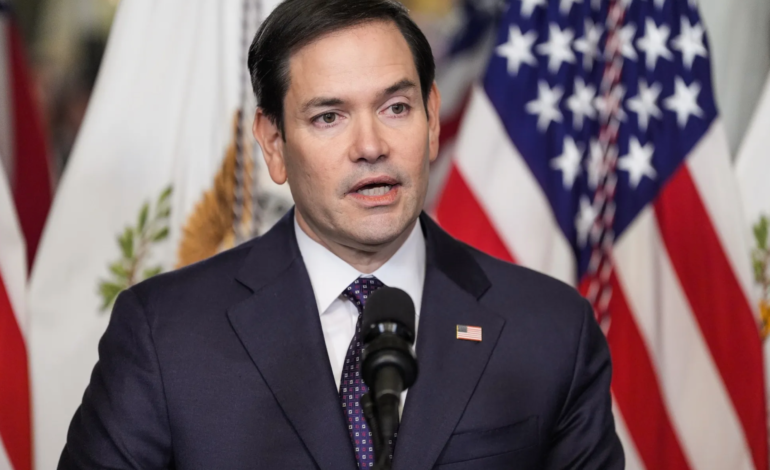
US Secretary of State Rubio declares end of traditional multilateralism

The United States has formally declared an end to what it calls “traditional multilateralism,” signalling a major shift in Washington’s global engagement strategy under President Donald Trump. The announcement comes days after the administration confirmed its withdrawal from 66 international organisations, arguing that many global institutions have become wasteful, ineffective, and misaligned with American interests.
US Secretary of State Marco Rubio made the remarks in a detailed Substack post, asserting that the post-World War II international system has expanded into a sprawling network of unaccountable bureaucracies. According to Rubio, many of these organisations suffer from overlapping mandates, weak governance, poor financial oversight, and ideological agendas that conflict with US sovereignty and economic priorities.
“The era of writing blank cheques to international bureaucracies is over,” Rubio said, stressing that American taxpayers should no longer fund institutions that fail to demonstrate measurable outcomes or respect US national interests.
President Trump earlier this week signed a Presidential Memorandum formalising the withdrawal from 66 international bodies identified through an ongoing State Department review. The administration described these organisations as redundant, mismanaged, unnecessary, or captured by political interests hostile to American values and prosperity.
Rubio said continued US participation in such bodies no longer advances global problem-solving and instead legitimises a broken system. He argued that many multilateral institutions have failed to deliver meaningful progress on core global challenges such as affordable energy access, economic development, and national sovereignty, despite consuming billions of dollars in funding.
The Secretary of State singled out several United Nations-linked organisations as examples of what the administration views as deep-seated dysfunction. He criticised the UN Population Fund for what he described as a history of ethical violations, including support for coercive reproductive policies. He also accused UN Women of ideological confusion and questioned its credibility as an advocate for women’s rights.
Rubio further alleged that the UN Framework Convention on Climate Change has diverted large sums of money toward “anti-energy” initiatives, including projects in politically sensitive regions such as the West Bank and Gaza. He also criticised the UN Permanent Forum on People of African Descent, accusing it of promoting divisive policies related to global reparations.
“These organisations boast a consistent record of dysfunction, if not outright malice,” Rubio said, adding that the United States owes better leadership not only to its citizens but also to countries around the world that rely on American leadership.
At the same time, Rubio rejected claims that the policy shift represents US isolationism. He insisted that Washington is not withdrawing from global affairs but rather abandoning an outdated model of multilateralism that treats the US as the default financier of international governance.
“This does not mean America is turning its back on the world,” he said. “It means we are demanding accountability, results, and respect for national sovereignty.”
Rubio noted that the 66 organisations announced this week are not the only ones under scrutiny, with the broader review of US participation in international institutions still ongoing. He said the Trump administration remains open to reforming global institutions but is equally prepared to walk away if reforms fail.
The move marks one of the most sweeping reassessments of US engagement with multilateral institutions in decades, potentially reshaping global diplomacy, development cooperation, and international governance in the years ahead.