Uruguay envoy warns US bid to control Greenland could create major rift within NATO

Uruguay’s Ambassador to India, Alberto Antonio Guani Amarilla, has warned that any attempt by the United States to assert control or sovereignty over Greenland could create serious tensions within the North Atlantic Treaty Organisation (NATO), the European Union (EU), and the wider international community.
Speaking in an interview with IANS, the Uruguayan envoy said that Washington’s growing expressions of influence over other territories risk destabilizing the existing world order. His remarks come amid renewed statements by US President Donald Trump asserting that Greenland is strategically vital to American national security.
“Sometimes states can justify actions in the name of security,” Guani Amarilla said. “But in this case, if the United States seeks to bring Greenland under its influence or sovereignty, it is going to create big problems with NATO, big problems with the European Union, and with the rest of the world.”
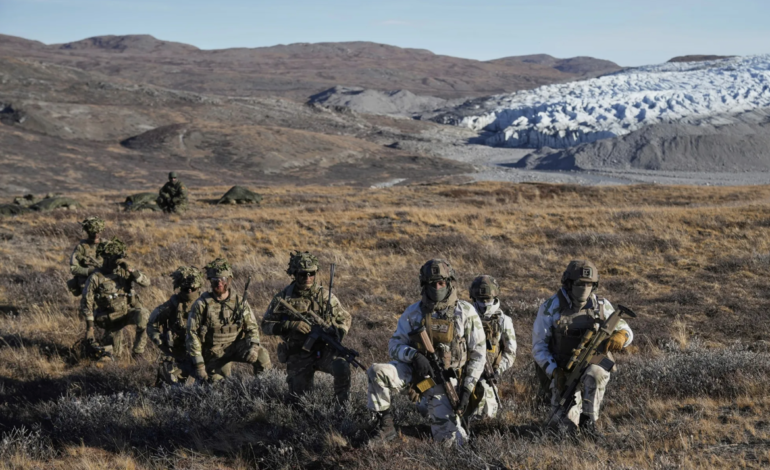
Greenland, an autonomous territory of Denmark, is already strategically important to NATO due to its Arctic location and proximity to key shipping routes and defense infrastructure. Trump recently reiterated that the US “needs Greenland for national security,” noting that the matter is being reviewed at the highest levels of the US government. While emphasizing strong ties with Denmark, Trump argued that Greenland’s geography makes it critical for US and allied defense interests.
When asked whether such a move could strain NATO unity, Guani Amarilla acknowledged the likelihood of internal friction. “Probably yes,” he said. “It’s another member of its own organization. It would likely create a big problem among NATO members.”
The Uruguayan diplomat also commented on broader US foreign policy actions, including military operations and diplomatic pressure in Latin America. Addressing questions on US actions against Venezuela and threats directed at Colombia, Guani Amarilla emphasized Uruguay’s long-standing commitment to non-intervention.
“According to our tradition in foreign policy, we do not support interference in the internal affairs of other states,” he said. “We believe Venezuelans should decide their own future.”
Earlier this month, reports claimed that Venezuelan President Nicolás Maduro and his wife had been “captured” and flown out of the country, though details remain contested.
Guani Amarilla further expressed concern over US decisions to freeze new immigrant visas for citizens of 75 countries. While acknowledging Washington’s sovereign right to determine its immigration policy, he said Uruguay does not agree with restrictions on free movement. “We believe in the free movement of people,” he stated.
Commenting on unrest in Iran, the ambassador described the situation as “very worrying” and strongly condemned violence. “We are against all violent methods,” he said, citing reports of nearly 3,000 deaths during protests. “Violence is not acceptable as a way to resolve political issues.”
Reaffirming Uruguay’s support for multilateralism, Guani Amarilla noted that India shares similar values. “Multilateral dialogue is the way forward,” he said, warning that unilateral actions by major powers risk pushing the world into deeper geopolitical instability.