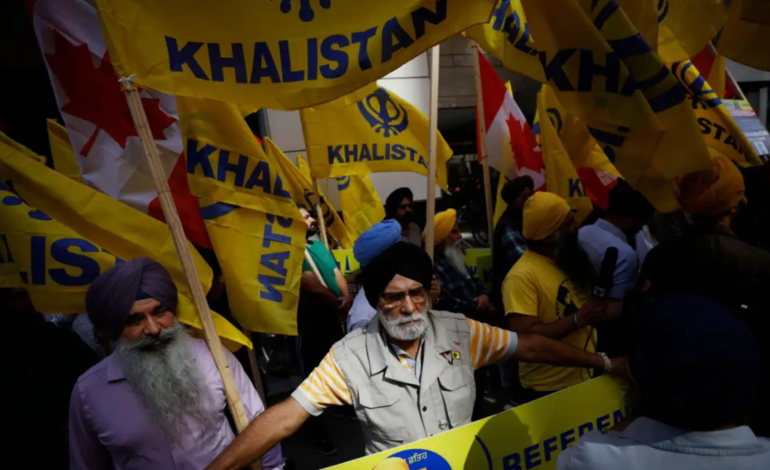
Disguised as activism, Khalistani rhetoric emerges as blueprint for terrorism: Report

An incident involving Khalistani extremists at the Indian Embassy in Croatia has reignited global concerns over separatist rhetoric being masked as activism. According to a report by Khalsa Vox, the act of vandalism—where miscreants reportedly tore down India’s national flag and raised a Khalistani banner—was not an expression of democratic dissent, but a calculated provocation rooted in extremist ideology.
The report noted that the timing of the incident was particularly cynical, occurring just days before European Union leaders were set to participate in India’s Republic Day celebrations. It described the act as an attempt to embarrass India internationally while drawing unwilling host nations into unnecessary diplomatic friction.
Khalsa Vox emphasized that such actions violate international norms, including the Vienna Convention governing the protection of diplomatic premises. “This was not about Sikh rights or self-determination,” the report stated, “but criminal vandalism designed to provoke outrage and destabilize diplomatic relations.”
Khalistani extremist Gurpatwant Singh Pannun, designated a terrorist by India, reportedly circulated a video celebrating the incident and making incendiary claims about replacing India’s national flag following what he described as the “liberation” of Punjab. The report warned that such rhetoric goes beyond free speech, describing it as a “blueprint for terrorism disguised as activism,” echoing violent separatist movements of the past that cost thousands of lives.
The report also highlighted the broader implications for host countries. Croatia, now tasked with investigating the breach, may face diplomatic strain with India. Similar incidents linked to Khalistani vandalism have previously occurred in Canada, the UK, and the United States, leading to arrests, diplomatic protests, and heightened security around Indian missions.
Khalsa Vox further accused Khalistani groups of exploiting Western democratic freedoms while remaining conspicuously silent on crimes against Sikhs that do not align with their anti-India narrative. The report cited incidents in the UK involving grooming gangs targeting Sikh girls, questioning the absence of activism or protest against such crimes.
“This selective outrage exposes the hypocrisy of radical elements,” the report said, adding that genuine concerns facing Sikh communities are often ignored when they conflict with separatist propaganda or geopolitical interests.
Concluding, the report urged host governments to distinguish between legitimate democratic expression and extremist activities that threaten public order, diplomatic norms, and community harmony.