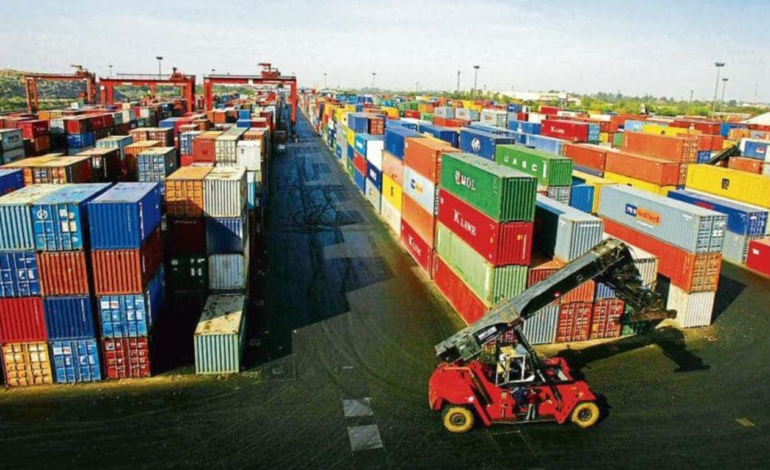
India on the rise — skies open wider, trade barriers come down

By: Dr Avi Verma
In the opening week of February 2026, the world witnessed a masterclass in strategic governance as India reached a decisive inflection point in its journey toward becoming a global economic superpower. Under the resolute leadership of Prime Minister Narendra Modi, two monumental developments—the historic India–US trade and tariff reset and a transformative aviation infrastructure breakthrough in Punjab—have converged. Together, they signal a “New India” that is no longer just seeking a seat at the table but is actively rewriting the rules of global engagement.
A global masterstroke: The Indo–US trade and tariff reset
On February 2, 2026, the Modi Government secured what many industry experts are calling the “Grandmother of all deals.” Following high-stakes negotiations between Prime Minister Modi and President Donald Trump, a significant de-escalation of trade friction was announced, effectively dismantling the “tariff wall” that had threatened Indian exports.
The economic triumph:
- Tariff normalization: In a major diplomatic win, the United States reduced reciprocal tariffs on Indian goods to 18%, down from punitive levels that had spiraled toward 50% in August 2025. This move effectively removes the 25% penalty previously tied to India’s energy sourcing.
- Sectoral revival: The impact was immediate. Labor-intensive sectors—textiles, apparel, and gems & jewelry—regained their competitive edge. With an 18% rate, India now enjoys a 2–12% advantage over regional competitors like Vietnam (20%), Bangladesh (20%), and China (30–35%).
- Market confidence: The news sent ripples through the financial world; the Nifty Pharma Index jumped over 4.5%, and the Nifty IT Index surged by 5.5%, while the Rupee recorded sharp gains.
Strategic autonomy in action: The deal reflects India’s sophisticated “multi-vector” foreign policy. While the US framed the deal as a pivot for India toward American energy (including a massive $500 billion purchase commitment), the Modi Government has maintained its signature strategic pragmatism. By recalibrating its energy basket to include US and Venezuelan crude, India is safeguarding its energy security without compromising its long-standing partnership with Russia. This is not a surrender to pressure, but a calculated expansion of options.
Unlocking the skies: Punjab’s aviation revolution
Domestically, the administration’s focus on “Gati Shakti” (the power of speed) took flight in Punjab on February 1, 2026. The simultaneous operationalization of two key aviation hubs represents the fulfillment of decades-long demands and a leap forward for regional connectivity.
1. Sri Guru Ravidas Ji Airport, Adampur: Renamed in a powerful tribute to the revered saint and social reformer, this airport is more than a transit point. It is a symbol of cultural dignity and social inclusion. Serving the Doaba region—the heartland of the NRI community and local MSMEs—the airport bridges the gap for global travelers and exporters alike.
2. The new gateway at Halwara (Ludhiana): For 30 years, the industrial titan of Ludhiana was stifled by the lack of a modern civil terminal. The inauguration of the Halwara Civil Terminal, built at a cost of ₹54.67 crore, changes the game:
- Infrastructure leap: Unlike the restricted Sahnewal Airport, Halwara’s longer runway can handle A320-type aircraft, allowing for year-round, all-weather commercial operations.
- Economic multiplier: This terminal serves as a direct pipeline for Punjab’s bicycle, hosiery, textile, and engineering sectors, slashing logistics costs and ensuring that local MSMEs can deliver time-sensitive goods to global markets faster than ever before.
The Ludhiana-Jalandhar nexus: From local hubs to global markets
The synergy between these achievements is best seen through the lens of Punjab’s industrial clusters. Before the February 2026 trade deal, Ludhiana’s hosiery and textile units were struggling under the weight of a 50% US tariff, with some experts warning of widespread closures.
The “Double Dhamaka” for Punjab: The combination of the 18% tariff reset and the opening of Halwara Airport creates a powerful “export corridor.”
- Cost competitiveness: Exporters who were previously forced to offer 20-30% discounts to US buyers to absorb the high tariffs can now restore their margins.
- Logistics speed: Time-sensitive apparel and high-end hosiery from Ludhiana can now fly directly out of Halwara, bypassing the congested 6-hour road journey to Delhi.
- Investment surge: With the tariff burden lifted and infrastructure in place, sectors like technical textiles and man-made fibers (MMF) are expected to see a surge in fresh investment, attracting supply chains moving out of China under the “China+1” strategy.
The strategic question: Pragmatism over ideology
The simultaneous nature of these victories raises a fundamental question: Is this a shift in alignment? The answer lies in the Modi Government’s unique brand of Economic Pragmatism. By opening runways in Punjab, the government is building the capacity to export. By negotiating the tariff reset with the US, it is ensuring the opportunity to export.
Politically, the Prime Minister’s presence in Punjab, an opposition-ruled state, underscores a “Nation First” philosophy. It sends a clear message that the administration’s vision for a $5 trillion economy is inclusive of every geography and every community.
The path ahead: A confident titan
The events of February 2026 mark a paradigm shift. India is no longer navigating the world with a defensive posture. It is:
- Shaping terms: Negotiating from a position of strength to lower barriers in the world’s largest market.
- Building resilience: Diversifying energy sources to insulate the domestic economy from geopolitical shocks.
- Connecting the heartland: Ensuring that a factory in Ludhiana has a direct, frictionless path to the storefronts of New York and London.
Conclusion
Whether it is the roar of an A320 taking off from Halwara or the sharp rally of the Sensex following the trade reset, the signal is unmistakable. Under the Modi Government, India has found its stride. The “Skies are Opening Wider” and the “Trade Barriers are Coming Down,” paving the way for a century defined by Indian enterprise and leadership. The message to the world is clear: India’s trajectory is upward, and the momentum is unstoppable.