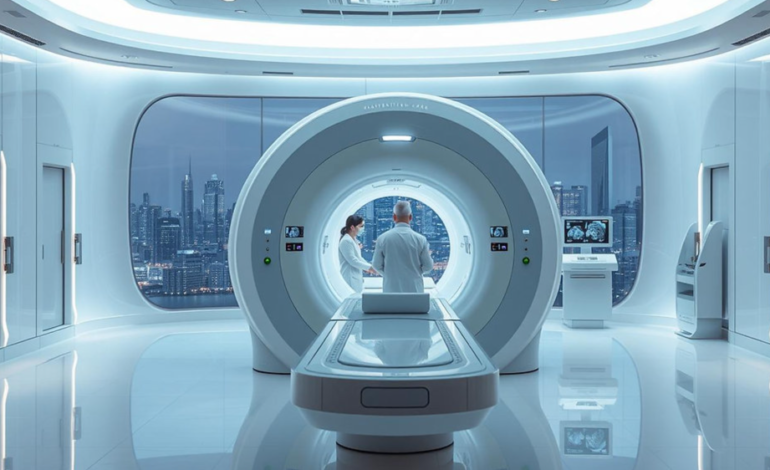
The future of preventive care: is the whole-body MRI right for you?

By: Dr. Avi Verma
In the evolving landscape of modern diagnostics, the whole-body MRI (WB-MRI) has emerged as a powerful, non-invasive tool for comprehensive health screening. Once reserved primarily for monitoring specific cancers like multiple myeloma, it is now being marketed directly to the general population as a “proactive” health measure.
What is a Whole-Body MRI?
A WB-MRI is a radiation-free imaging procedure that examines the entire body—from the brain to the pelvis—using strong magnetic fields and radio waves. In approximately 40 to 60 minutes, it provides extraordinarily detailed images of internal organs, tissues, and bones without the need for needles or surgery.
The scan is designed to detect hidden abnormalities before symptoms manifest, including early-stage cancers (brain, lung, liver, and renal), vascular aneurysms, and inflammatory diseases.
The rising trend in India
The MRI market in India is expanding rapidly, driven by a shift toward preventive healthcare. Several factors are fueling its popularity:
- Technological innovation: India is moving toward indigenous MRI technology. Home-grown, helium-lean scanners are expected to reduce import dependence and significantly lower scan prices.
- Affordability: Costing between ₹25,000 to ₹60,000, these scans are becoming more accessible to the urban middle class compared to Western pricing.
- Radiation-free appeal: Unlike CT scans, WB-MRI does not involve ionizing radiation, making it an attractive option for repeat screenings.
Availability and approval in the USA
In the United States, the status of whole-body MRI for screening healthy individuals remains a subject of debate.
- Commercial availability: Companies like Prenuvoand Ezra have gained significant traction, offering full-body scans aimed at early disease detection.
- Regulatory status: While the MRI machines themselves are FDA-cleared, the use of WB-MRI as a general screening tool for asymptomatic people is not universally endorsed by the medical establishment.
- Medical consensus: The American College of Radiology (ACR) maintains that there is insufficient evidence to justify recommending total-body screening for patients with no symptoms or specific risk factors.
Limitations and the ‘false positive’ risk
Despite its advanced capabilities, WB-MRI is not without drawbacks. The primary concern is the high frequency of incidental findings—benign abnormalities (like harmless cysts) that pose no threat but can cause significant anxiety. These “false positives” often lead to unnecessary, invasive, and costly follow-up procedures.
Additionally, WB-MRI is not suitable for everyone, particularly those with certain metallic implants, pacemakers, or specific bone rods that could be affected by magnetic waves.
Disclaimer:
The information provided in this article is for educational and informational purposes only and is not intended as a substitute for professional medical advice, diagnosis, or treatment. Always seek the advice of your physician or another qualified healthcare provider with any questions you may have regarding a medical condition.
While Whole-Body MRI (WB-MRI) is an advanced diagnostic tool, its use for asymptomatic screening is not currently recommended by major medical bodies, including the American College of Radiology (ACR)and the American College of Preventive Medicine, due to the high risk of false positives. Relying on this information or undergoing any medical procedure is at your sole risk. Neither the author nor the publication shall be held liable for any decisions made based on the content of this article.