UN Special Rapporteur warns restrictions, funding cuts undermine Afghan women’s healthcare access

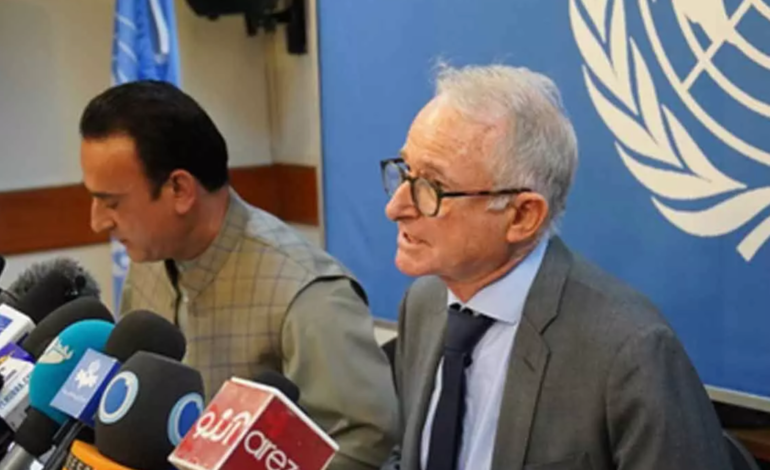
Richard Bennett, the United Nations Special Rapporteur on the situation of human rights in Afghanistan, has warned that mounting restrictions and international funding cuts are severely undermining Afghan women’s access to essential healthcare services.
Bennett is set to present a new report on women’s and girls’ right to health at the 61st session of the United Nations Human Rights Council in Geneva. According to Afghan media reports, he highlighted that Afghanistan’s healthcare system was already fragile due to decades of conflict, poverty and chronic underinvestment. However, recent policy decisions and financial shortfalls have further deepened the crisis.
Three drivers of the healthcare crisis
Bennett identified three key causes: structural weaknesses in the healthcare system, restrictive policies imposed by the Taliban, and significant reductions in international aid.
He noted that more than 300 clinics have been forced to close due to funding cuts. Staffing levels and working hours have been reduced, particularly affecting female doctors, nurses and midwives — professionals critical to delivering care to women in a conservative social context.
Taliban-imposed measures, including banning women from pursuing medical education, limiting freedom of movement and requiring a male guardian to accompany women to clinics, have created substantial barriers to accessing care.
Disproportionate impact on vulnerable groups
The report adopts a “multi-dimensional” analysis of discrimination, noting that rural women, elderly women, women with disabilities and those without a male guardian face even greater challenges in accessing physical, mental and reproductive healthcare services.
Bennett described Afghan women and girls’ continued determination to pursue education as a sign of hope, stressing that education is essential for individuals to understand and claim their rights. Since returning to power in 2021, the Taliban has banned girls from secondary schools, universities and medical institutes — raising concerns about the long-term sustainability of the country’s health sector.
Recent findings by the United Nations Development Programme further underline the economic strain. A February report found that 75 per cent of Afghans struggle to meet daily needs, while 88 per cent of female-headed households lack access to minimum living requirements.
With only seven per cent of women participating in work outside the home, compared to 84 per cent of men, gender disparities continue to widen, compounding healthcare and humanitarian challenges across Afghanistan.