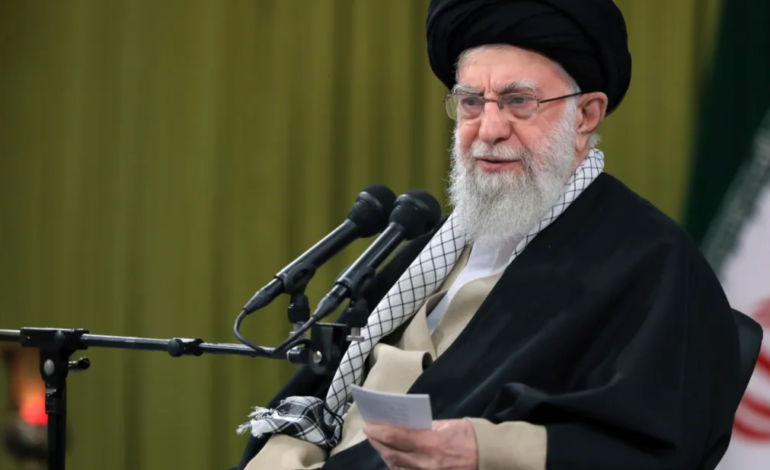
IRGC vows ‘most ferocious offensive’ after Khamenei’s reported death

Iran’s Islamic Revolutionary Guard Corps (IRGC) has vowed sweeping retaliation following the reported killing of Supreme Leader Ayatollah Ali Khamenei, promising what it called the “most ferocious offensive operation in history” against the United States and Israel.
In a statement posted on its official Telegram channel, the IRGC declared that the “hand of revenge of the Iranian nation” would relentlessly pursue those responsible for what it described as a grave crime. The force said it would deliver a “severe, decisive and regrettable punishment” to the alleged perpetrators.
The IRGC added that Iran’s Armed Forces and the Basij militia would continue defending the country’s leadership legacy and confront what it termed both internal and external threats. Iran’s Cabinet echoed the warning, stating that the “great crime will never go unanswered.”
US President Donald Trump announced that Khamenei had been killed in a coordinated US-Israeli operation, claiming the 86-year-old cleric could not evade advanced intelligence and tracking systems. However, Iranian authorities have not formally confirmed his death, and uncertainty persists over the country’s leadership transition.
The reported killing marks a dramatic turning point in Iran’s 46-year Islamic Republic system. Tehran responded swiftly to the US-Israel strike with waves of drones and missiles targeting locations in Israel and across parts of the Gulf, including Qatar, Bahrain, the United Arab Emirates, Jordan, and Kuwait.
The US action reportedly followed stalled nuclear negotiations in Geneva mediated by Oman. Washington had demanded a complete halt to uranium enrichment, while Tehran signaled progress in talks.
Inside Iran, the political atmosphere remains tense. Recent nationwide protests driven by economic hardship had already strained the government. While scattered reports on social media suggested some celebrations following the reported death, there were no clear signs of a broader uprising.
With regional tensions surging and leadership uncertainty in Tehran, analysts warn the confrontation risks triggering wider instability across the Middle East.