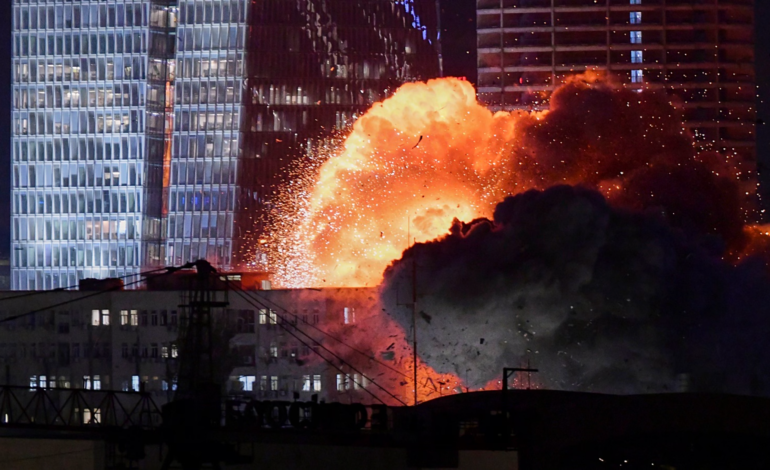
US blitz hits 1,000 Iran military sites under Operation Epic Fury

The United States launched a sweeping military offensive against Iran, striking more than 1,000 military targets within the first 24 hours under “Operation Epic Fury,” according to US Central Command (CENTCOM).
The operation, initiated at 1:15 a.m. on February 28 at the direction of President Donald Trump, was described as a coordinated effort to dismantle Iran’s security apparatus and neutralize sites deemed to pose an “imminent threat.” In a fact sheet released after the initial wave, CENTCOM stated that over 1,000 targets were struck across multiple domains.
The scale of the offensive underscores a broad, multi-layered military campaign. Assets deployed included B-2 stealth bombers, F-35, F-22, F-16, and F-18 fighter jets, along with A-10 attack aircraft. Electronic warfare and surveillance platforms such as EA-18G electronic attack aircraft, airborne early warning and control systems, reconnaissance aircraft, and communication relay systems were also utilized.
Missile defense systems, including Patriot interceptors and THAAD anti-ballistic missile systems, formed part of the defensive shield. Naval forces featured nuclear-powered aircraft carriers and guided-missile destroyers operating in the region.
Unmanned and ground-based systems played a key role as well. CENTCOM cited the use of MQ-9 Reaper drones, LUCAS unmanned systems, and M-142 High Mobility Artillery Rocket Systems (HIMARS). Strategic airlift and refueling support were provided by C-17 Globemaster and C-130 cargo aircraft.
The fact sheet also referenced counter-drone systems and “special capabilities” not publicly disclosed.
Targets struck reportedly focused on Iran’s military command structure and missile infrastructure. These included command and control centers, Islamic Revolutionary Guard Corps (IRGC) joint headquarters, IRGC Aerospace Forces facilities, integrated air defense systems, ballistic missile sites, and military communication networks. Naval targets such as Iranian Navy ships, submarines, and anti-ship missile installations were also listed.
No casualty figures or detailed battle damage assessments were immediately released. Officials framed the operation as preemptive and threat-driven, aimed at degrading Iran’s capacity to conduct missile launches or regional military operations.
The IRGC has long been central to Iran’s military strategy, overseeing ballistic missile development and coordinating regional security activities. The scale of the strikes marks one of the most extensive US military actions in the region in recent years, significantly escalating tensions in an already volatile Middle East.