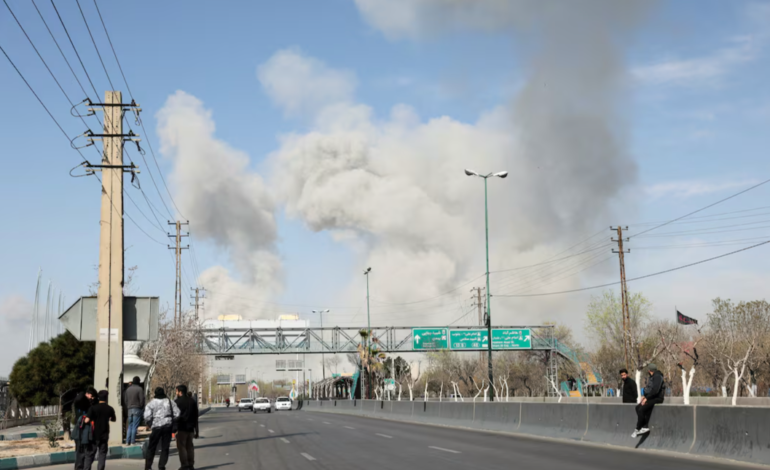
Bombing of Tehran intensifies as war enters sixth day

The U.S.-Israeli military campaign against Iran entered its sixth day Thursday, with residents reporting some of the heaviest bombardment yet in northern Tehran. Explosions echoed across the capital as Israeli forces struck what they described as government and military targets.
“Today is worse than yesterday. They are striking northern Tehran. We have nowhere to go. It is like a war zone,” said a 36-year-old resident reached by phone as blasts sounded in the background.
The escalation follows the assassination of Iran’s Supreme Leader Ali Khamenei in the opening hours of the joint U.S.-Israeli air campaign — the first time a sitting head of state has been killed in such a strike. Planned public mourning ceremonies were abruptly postponed, disrupting what appeared to be preparations to elevate his son, Mojtaba Khamenei, as successor. Iranian officials provided no formal explanation, though sources cited security fears amid ongoing airstrikes.
Tehran has vowed retaliation after a U.S. torpedo attack sank an Iranian warship off Sri Lanka, killing more than 80 sailors. Iran’s foreign minister warned Washington would “bitterly regret” the move, while Revolutionary Guards commander General Kioumars Heydari declared that Iran would target American forces “wherever they are.”
Israel signaled that the campaign is entering a second phase, focusing on underground missile storage sites and bunkers. Israeli officials have said they would consider any successor maintaining hostile policies a legitimate target.
The conflict has sent shockwaves through global energy markets. Disruptions to tanker traffic through the Strait of Hormuz — a corridor handling roughly one-fifth of global oil and liquefied natural gas shipments — have intensified fears of prolonged supply constraints. Iran’s Revolutionary Guards claimed they struck a U.S. tanker in the Gulf and warned that passage through the strait would remain under Iranian control.
Meanwhile, air raid sirens continued to sound across Israel, though military officials reported a reduction in daily missile launches from Iran. Regional tensions also spilled over into neighboring states, with Azerbaijan reporting drone incursions near its border.
Inside Iran, dissent simmered. State television was briefly hacked to air a message from exiled opposition figure Reza Pahlavi, urging unity and change. While some Iranians reportedly celebrated Khamenei’s death online, public protests remain constrained amid the ongoing bombardment.
As both sides escalate military operations, diplomatic efforts appear stalled, raising fears of a broader regional war with lasting geopolitical and economic consequences.