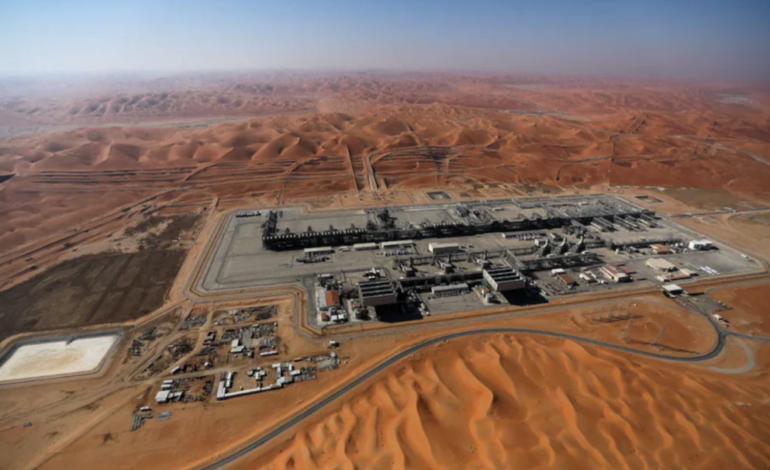
Saudi Arabia intercepts drones targeting Shaybah oil field amid widening Iran-Gulf attacks

Saudi Arabia’s defence ministry said it intercepted multiple drones heading toward the strategic Shaybah oil field on Thursday as Iran expanded military actions across key energy and maritime locations in the Gulf.
According to Saudi officials, an unmanned aerial vehicle approaching the Shaybah facility was intercepted and destroyed before reaching the target. Earlier, two additional drones heading toward the same oil field were also shot down by Saudi air defences.
The Shaybah field, located near Saudi Arabia’s border with the United Arab Emirates, is one of the kingdom’s major oil production hubs and a crucial component of global energy supply.
The drone interceptions came amid a widening wave of attacks linked to the escalating conflict involving Iran, the United States, and Israel. Iranian military activity on Thursday targeted several energy and shipping locations across the Middle East.
A drone strike at Oman’s Salalah port sparked fires at fuel storage facilities, while a container ship was reportedly struck off the coast of Jebel Ali near Dubai in the United Arab Emirates. Vessels were also attacked in Iraqi waters.
An American-owned crude oil tanker near Basra was hit in one such incident. The Indian embassy in Iraq confirmed that one Indian crew member was killed while the remaining 15 crew members were evacuated to safety.
Explosions were also heard in downtown Dubai amid reports of continued drone activity across the Gulf. Authorities said a fire at Dubai Creek Harbour caused by a drone strike had been contained.
Regional infrastructure has been increasingly affected by the conflict. Oman Air announced the cancellation of several routes until March 22 due to regional airspace disruptions, while financial institutions and companies in Dubai temporarily evacuated some offices following threats to economic targets.
Iran’s new Supreme Leader Mojtaba Khamenei vowed to continue retaliation against what Tehran describes as aggression by the United States and Israel. In a statement broadcast on state television, he said revenge would remain a priority until fully achieved.
Khamenei also ordered Iranian forces to maintain the closure of the Strait of Hormuz, a critical global oil shipping route. The move has intensified fears of a major disruption to global energy supplies.
Oil markets have already reacted to the escalating conflict, with Brent crude prices rising above $100 per barrel amid supply concerns.
The United States military said it has carried out around 6,000 strikes since the war with Iran began late last month, targeting Iranian vessels, military infrastructure, and maritime assets.
Meanwhile, the United Nations Security Council approved a resolution condemning attacks on Gulf countries and calling for an end to escalating hostilities in the region.
Analysts warn that continued attacks on energy infrastructure and shipping routes could significantly disrupt global oil markets and international trade if the conflict continues to intensify.