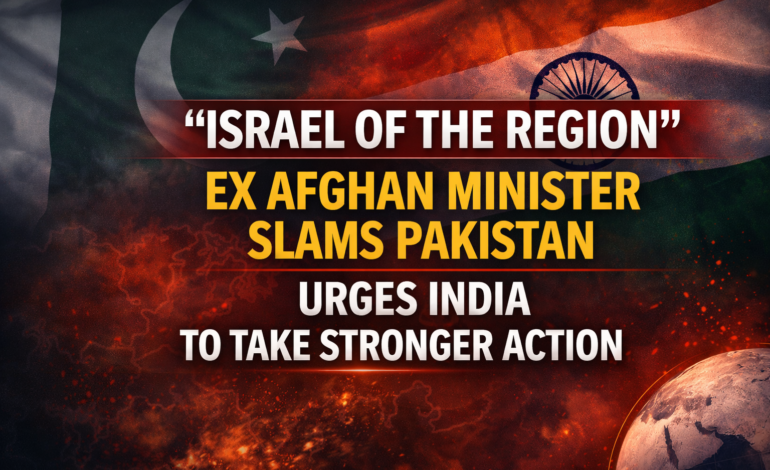
“Israel of the region” ex Afghan minister warns on Pakistan, urges India to take stronger action

A former Afghan minister has sharply criticized Pakistan, describing its role in regional affairs as destabilizing and urging India to adopt a more assertive stance in response. Zardasht Shams, who previously served as Afghanistan’s Deputy Information Minister, made the remarks amid escalating tensions and growing security concerns across South Asia.
Shams drew a controversial comparison, calling Pakistan the “Israel of the region,” suggesting that its policies and actions extend beyond its borders and contribute to instability in neighboring countries. His comments reflect longstanding concerns within Afghan political circles over Pakistan’s alleged involvement in regional conflicts and cross-border activities.
Highlighting the broader implications, Shams warned that the impact of Pakistan’s actions is not limited to Afghanistan alone but poses a wider threat to regional peace and security. He emphasized that the evolving geopolitical environment requires a coordinated and firm response from neighboring nations, particularly India.
Also See: Iran strike on Qatar LNG hub sparks global energy shock, Europe and Asia face crisis
Calling for a shift in approach, Shams urged New Delhi to move beyond diplomatic statements and take stronger, more proactive measures. According to him, mere condemnation is insufficient in addressing the scale of the challenges posed. Instead, he advocated for a strategic response that combines diplomatic, economic, and security measures to counter emerging threats effectively.
His remarks come at a time when tensions in the region remain high, with ongoing concerns over cross-border hostilities and the risk of further escalation. The situation has placed increased pressure on regional powers, especially India, to play a decisive role in maintaining stability and safeguarding their strategic interests.
India, which has traditionally balanced its approach through diplomacy and regional engagement, now faces growing calls to reassess its strategy in light of evolving threats. Shams’ statement adds to a chorus of voices urging stronger action and a more assertive regional posture.
While his comparison is likely to spark debate and controversy, it underscores the deepening anxieties over regional security dynamics. As South Asia navigates a complex and volatile landscape, the need for coordinated efforts and decisive leadership is becoming increasingly critical.
Also See: Narendra Modi speaks with UAE President, agrees on keeping Strait of Hormuz safe