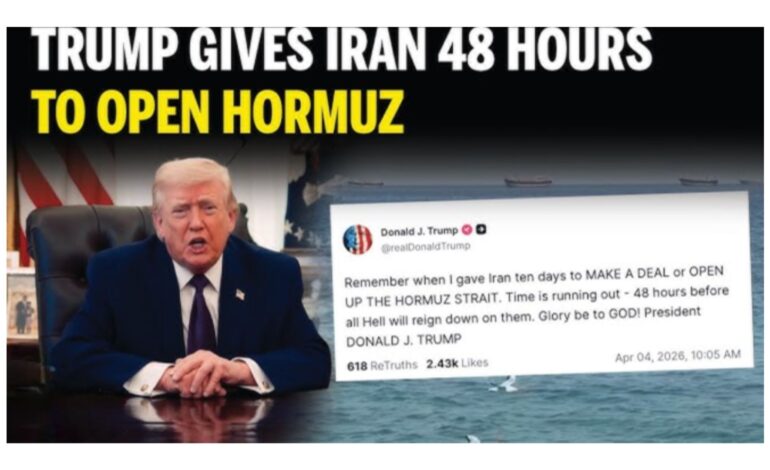
Trump gives Iran 48-hour ultimatum to strike deal or reopen Hormuz

U.S. President Donald Trump has issued a stark 48-hour ultimatum to Iran, demanding that Tehran either make progress toward a deal or reopen the strategically critical Strait of Hormuz, warning of severe consequences if the deadline is not met.
In a post on his Truth Social platform, Trump declared that “time is running out,” cautioning that failure to comply would result in escalation. The statement intensifies pressure on Iran amid ongoing tensions and fragile diplomatic efforts.
The ultimatum follows Trump’s earlier decision on March 26 to pause strikes on Iran’s energy infrastructure for 10 days, a move he said was made to allow space for negotiations. That pause is set to expire on April 6, aligning with the new 48-hour deadline.
Trump indicated that the temporary halt in military action came at the request of the Iranian government, suggesting that backchannel discussions are underway. He also claimed that negotiations are progressing positively, despite conflicting reports and skepticism from analysts.
Also See: White House seeks $1.5 trillion defence budget amid escalating Iran conflict
The Strait of Hormuz remains at the center of the standoff. As one of the world’s most vital maritime chokepoints, it handles a significant portion of global oil shipments. Any disruption to traffic through the strait has immediate implications for energy markets and global trade.
Recent weeks have seen heightened tensions in the region, with restrictions on navigation and military activity impacting shipping flows. While there are signs of limited recovery in maritime traffic, uncertainty continues to weigh heavily on the global energy outlook.
Trump’s ultimatum reflects a dual-track strategy of pressure and diplomacy—combining threats of military escalation with claims of ongoing negotiations. Experts say such messaging is designed to force concessions while maintaining leverage at the negotiating table.
However, critics warn that ultimatums can escalate already volatile situations, increasing the risk of miscalculation. The absence of publicly confirmed diplomatic breakthroughs adds to uncertainty about the direction of talks.
The broader geopolitical context further complicates the situation, with regional actors closely monitoring developments. Any escalation could draw in additional players and widen the scope of the conflict.
As the deadline approaches, global markets and policymakers are watching closely. The outcome of this high-stakes standoff could shape not only U.S.-Iran relations but also the stability of global energy supplies and regional security dynamics.
Also See: Iran warns of retaliatory strikes after a reported US attack on a key Tehran-Karaj bridge