US, Iran agree to two-week ceasefire as talks set to begin in Pakistan

The United States and Iran have agreed to a two-week ceasefire, marking a significant pause in hostilities as both sides prepare to enter direct negotiations aimed at de-escalating the conflict.
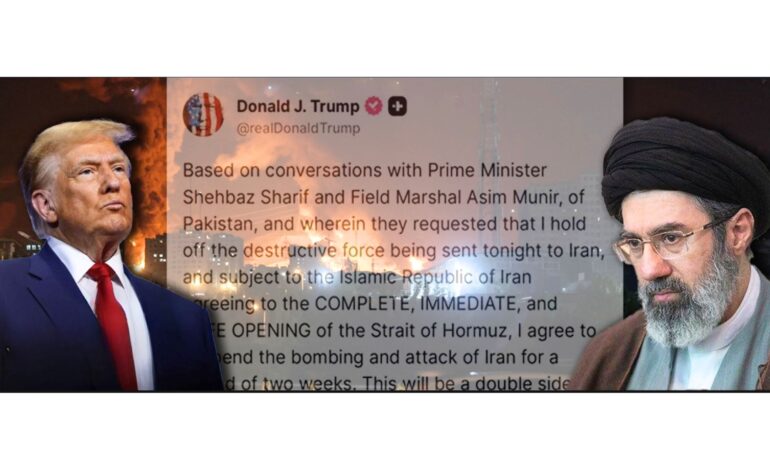
U.S. President Donald Trump announced that Washington has “suspended the bombing of Iran” for a period of two weeks, signaling a temporary halt to military operations. The decision comes as part of a broader diplomatic effort to open a path toward a negotiated settlement.
The ceasefire agreement was facilitated by Pakistan, which has played a key mediating role between the two sides. Islamabad confirmed that all parties involved, along with their regional allies, have agreed to an immediate cessation of hostilities across multiple fronts, including Lebanon.
As part of the diplomatic process, Pakistan will host direct talks between U.S. and Iranian representatives on April 10. Officials indicated that discussions would focus on a framework based on Iran’s reported 10-point proposal, which outlines conditions for reducing tensions and moving toward a longer-term resolution.
However, the ceasefire appears to be conditional. Trump stated that the pause in military action is contingent upon Iran reopening the Strait of Hormuz, a critical global shipping route through which a significant portion of the world’s oil supply passes. The reopening of the strait has been a central demand from Washington amid concerns over global energy stability.
The development marks a notable shift after weeks of intense military exchanges, including airstrikes, missile attacks, and drone operations across the region. The conflict had raised fears of a broader war involving multiple Middle Eastern countries and threatened to disrupt global energy markets.
While the ceasefire offers a window for diplomacy, analysts caution that the situation remains fragile. Previous attempts at de-escalation have faltered, and deep mistrust persists between Washington and Tehran.
Regional stakeholders are closely watching the upcoming talks, which are seen as a critical opportunity to prevent further escalation. The inclusion of multiple fronts in the ceasefire agreement reflects the wide geographic scope of the conflict and the need for coordinated efforts to maintain stability.
As both sides prepare for negotiations, the success of the ceasefire will depend on adherence to its terms and progress toward a broader agreement. For now, the pause in fighting offers a rare moment of relief in a conflict that has rapidly intensified in recent weeks.