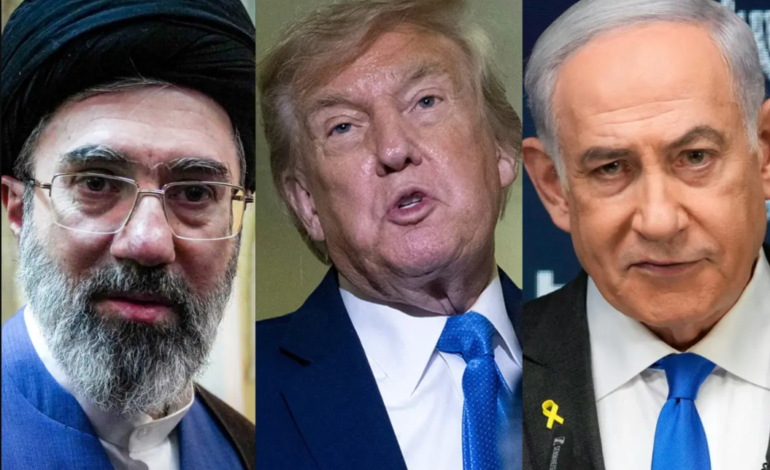
Netanyahu backs Iran-US ceasefire but says Lebanon not included, raising doubts over truce

Israeli Prime Minister Benjamin Netanyahu has expressed support for the newly announced two-week ceasefire between the United States and Iran, but warned that the agreement does not extend to Lebanon, casting uncertainty over how long the fragile truce will hold.
The ceasefire, brokered with the help of Pakistan after weeks of intense fighting, aims to pause escalating hostilities between Washington and Tehran and create space for diplomatic negotiations. While Israel was not directly involved in the talks, U.S. President Donald Trump reportedly consulted Netanyahu before finalizing the agreement.
In his first public response, Netanyahu said Israel backs the U.S. decision to suspend strikes on Iran and remains aligned with Washington’s broader strategic goals in the region. However, he made it clear that Israeli military operations against Hezbollah in Lebanon would continue.
“The ceasefire does not cover Lebanon,” Netanyahu stated, signaling that Israel’s campaign against the Iran-backed militant group remains unchanged despite the pause in U.S.-Iran hostilities.
The position has exposed a growing gap between the ceasefire’s stated objectives and realities on the ground. Iran’s announcement of the agreement suggested a broader de-escalation framework, reportedly including a halt to hostilities involving Hezbollah. Similarly, Pakistan’s Prime Minister Shehbaz Sharif said the ceasefire applied “everywhere,” including Lebanon.
However, there has been no explicit confirmation from the United States that Lebanon is included in the agreement, adding to the confusion and raising concerns over potential continued conflict in the region.
The situation is further complicated by reports that Israel has continued limited strikes even after the ceasefire announcement, though details remain unclear.
Lebanon became a key front in the conflict after Hezbollah launched attacks on Israel, claiming retaliation for earlier strikes linked to Iran. Israel responded with a sustained military campaign, vowing to dismantle Hezbollah’s operational capabilities.
Despite diplomatic efforts by the Lebanese government to de-escalate tensions, Hezbollah leadership has rejected negotiations with Israel, framing continued resistance as essential.
Netanyahu has reportedly conveyed to U.S. officials that any agreement with Iran would not constrain Israel’s actions in Lebanon. This stance suggests that even if U.S.-Iran talks progress, parallel conflict dynamics involving Israel and Hezbollah could persist.
As a result, while the ceasefire offers a temporary pause in one dimension of the conflict, the exclusion of Lebanon raises serious questions about its overall effectiveness. With multiple actors pursuing differing objectives, the region remains on edge despite the diplomatic breakthrough.