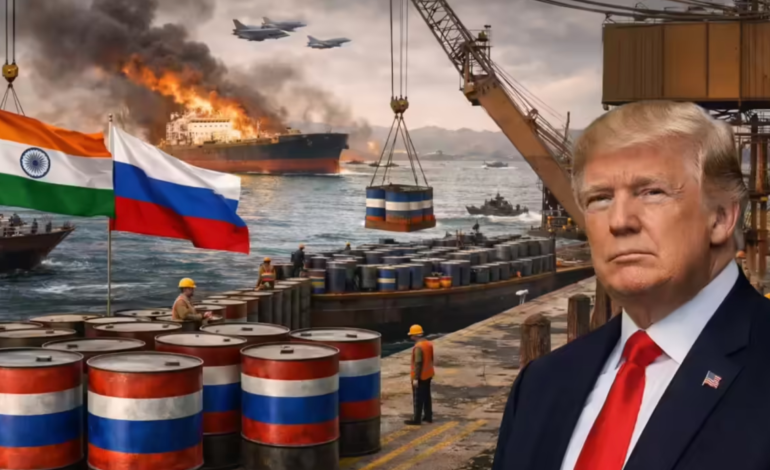
US ends oil waivers, India faces fresh energy strategy challenge amid global supply strain

The United States’ decision to end temporary waivers allowing the sale of Russian and Iranian oil already at sea is set to reshape global energy dynamics, with India among the countries most affected.
US Treasury Secretary Scott Bessent confirmed that Washington will not renew the general license for Russian oil shipments that were granted as a short-term relief measure. A similar stance has been taken on Iranian crude, signalling a return to stricter enforcement under the “maximum pressure” policy.
The waivers, introduced in March, allowed countries to import oil already in transit despite sanctions, helping stabilize global markets amid disruptions caused by the ongoing conflict in West Asia. For India, the temporary window proved crucial, enabling refiners to secure supplies during a period of heightened uncertainty.
During this period, Indian refiners imported significant volumes of discounted crude. Purchases of Russian oil surged sharply, while Iranian imports resumed briefly after nearly seven years. These emergency acquisitions helped offset supply disruptions triggered by tensions around the Strait of Hormuz, through which a significant portion of global energy supplies passes.
However, with both waivers now expiring, India faces renewed pressure to recalibrate its crude sourcing strategy. The end of these exemptions limits access to discounted oil from Russia and Iran, potentially increasing procurement costs and complicating supply chains.
Energy markets are already under strain due to geopolitical instability, with restricted shipping routes and rising freight costs adding to the challenge. Any further tightening of supplies could contribute to higher global oil prices, directly impacting import-dependent economies like India.
Analysts suggest that India may now look to diversify its sourcing by increasing imports from alternative suppliers in the Middle East, the United States, and Africa. At the same time, the government is expected to accelerate efforts toward energy diversification, including investments in renewable energy, nuclear power, and domestic production.
Despite the immediate challenges, officials have indicated that India’s oil supply remains secure in the short term. Strategic reserves and advance закупки during the waiver period have provided a buffer against sudden disruptions.
The broader concern, however, lies in the long-term implications. As geopolitical tensions persist and energy flows remain uncertain, India’s dependence on imports continues to expose it to external shocks.
The end of the waivers marks a turning point, forcing countries like India to adapt quickly to a more constrained and competitive global energy landscape, where strategic flexibility and diversification will be key to maintaining stability.