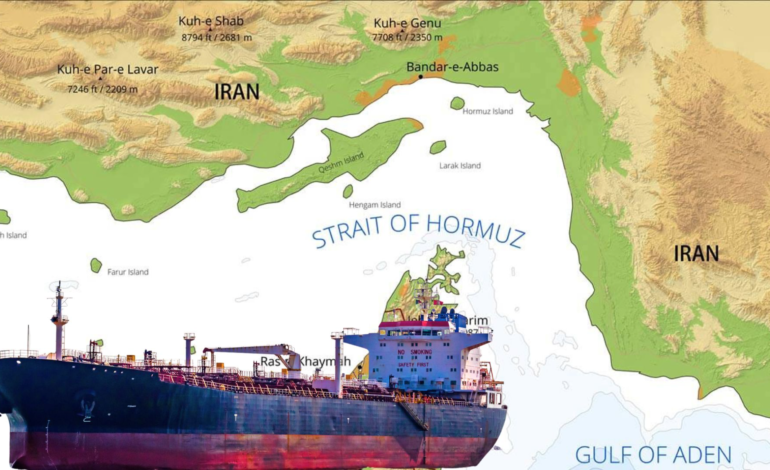
The Strait of Hormuz: A fragile opening amid continuing United States–Iran maritime tensions

By: Dr. Avi Verma
As of April 17, 2026, the Strait of Hormuz has entered a tense and highly conditional phase of partial reopening. Iran has declared the key waterway open to commercial shipping during a 10-day ceasefire linked to the Israel–Lebanon conflict. However, the move falls far short of a full normalization, as strict routing conditions and ongoing United States maritime enforcement continue to shape a fragile operating environment.
A conditional reopening, not a return to normalcy
Iran’s decision to allow commercial vessels passage has eased immediate pressure on global markets, but the relief remains limited. Ships are required to follow designated routes under Iranian oversight, signaling that Tehran continues to assert strategic control rather than step back from it.
At the same time, United States authorities have maintained enforcement pressure on Iranian maritime activity, reinforcing a dual reality: passage is possible, but heavily managed and politically constrained.
A conflict without resolution
The broader confrontation between Iran and the United States–Israel alignment remains unresolved. While the Israel–Lebanon ceasefire has reduced immediate regional violence, it has not produced a wider diplomatic breakthrough.
Maritime pressure remains a central tool for both sides. The United States continues deterrence operations through naval presence, while Iran uses geographic leverage over the strait to preserve influence without triggering full escalation.
A managed chokepoint, not normal waters
The Strait of Hormuz is no longer fully blocked, but it is far from normal. It now functions as a tightly managed chokepoint where navigation is possible but constrained by political risk and operational uncertainty.
Shipping companies remain cautious, with higher insurance premiums, slower transit decisions, and risk-averse routing strategies reflecting ongoing instability.
Global economic implications
The conditional reopening has reduced the risk of an immediate supply shock, but volatility persists:
- Energy markets: Oil prices remain elevated due to persistent geopolitical risk premiums
- Supply chains: Partial movement has resumed, but bottlenecks continue for energy-linked goods
- Inflation pressures: Transport and insurance costs remain high despite eased disruption
- Market sentiment: Investors remain highly sensitive to any escalation in the strait
Strategic signaling and risk
Both sides are engaged in calibrated signaling. Iran’s controlled reopening projects restraint while preserving leverage. The United States maintains pressure to reinforce strategic deterrence.
Yet the risk landscape remains fragile. With military oversight and commercial traffic sharing the same narrow corridor, the potential for miscalculation remains significant.
Conclusion
The reopening of the Strait of Hormuz is not a resolution but a temporary and conditional pause. It reflects a delicate equilibrium defined by limited access, sustained mistrust, and unresolved confrontation.
The strait remains the world’s most critical energy artery operating under geopolitical strain. Whether this moment evolves into sustained diplomacy or another cycle of escalation will depend on how long this controlled balance can endure.