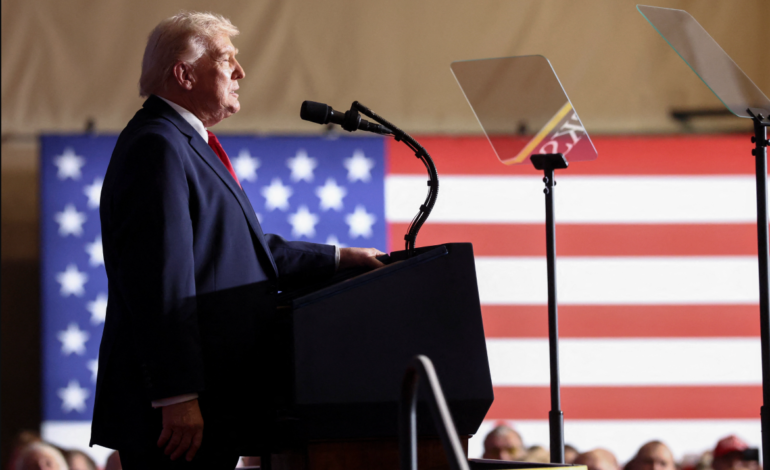
Trump warns Iran amid talks, says US will not back down

U.S. President Donald Trump issued a strong warning to Iran on Saturday, declaring that Tehran “can’t blackmail us” even as Washington continues diplomatic talks aimed at easing rising tensions in the region.
Speaking at the White House, Trump confirmed that the United States is actively engaged in discussions with Iran but made it clear that negotiations would not come at the cost of strategic pressure. “We’re talking to them… it’s working out very well,” he said, while emphasizing that the U.S. is maintaining a firm stance.
The remarks come at a time of heightened instability in the Gulf, particularly around the Strait of Hormuz, a critical artery for global oil shipments. Trump accused Iran of attempting to disrupt maritime traffic again, warning that such actions would not be tolerated.
“They wanted to close up the strait again… and they can’t blackmail us,” he said, reinforcing Washington’s position that freedom of navigation in international waters must be preserved.
Despite the tensions, Trump hinted at potential progress in diplomatic efforts, suggesting that developments could unfold quickly. “We’ll have some information by the end of the day,” he said, without elaborating further.
The U.S. President also pointed to shifting global shipping patterns, claiming that disruptions in the Gulf have already led to changes in trade routes. According to Trump, more shipments are being redirected toward American ports, including those in Texas and Louisiana, reflecting the broader impact of the crisis on global logistics.
In addition to addressing current tensions, Trump revisited past conflicts with Iran, defending the U.S. decision to eliminate Iranian commander Qasem Soleimani. He linked the move to the protection of American troops, accusing Iran of supporting attacks that resulted in U.S. casualties.
“They’ve killed a lot of people. A lot of our people have been killed,” Trump said, reiterating long-standing U.S. concerns over Iran’s regional activities and military influence.
The dual message of diplomacy and deterrence reflects Washington’s broader strategy—engaging Iran in talks while maintaining military and economic pressure. Analysts say this approach aims to push Tehran toward concessions on key issues, including nuclear development and regional security.
As tensions persist and negotiations continue, the situation remains fluid. The coming days are likely to be crucial in determining whether diplomacy can prevail or whether the standoff will deepen further, with significant implications for global energy markets and geopolitical stability.