New directions in osteoporosis treatment Focus on bone regeneration science

By: Dr. Avi Verma
Recent discussions circulating online suggest that researchers in Japan are developing a breakthrough osteoporosis therapy that “stimulates natural bone regeneration by activating proteins that control osteoblasts,” with the aim of fully restoring bone density rather than merely slowing bone loss. While this concept broadly reflects ongoing research trends in bone biology, the specific claim oversimplifies and overstates the status of any single new treatment.
Understanding osteoporosis and current treatments
Osteoporosis is a widespread condition affecting millions globally, particularly older adults, and is characterized by reduced bone mass and an increased risk of fractures.
Current standard therapies fall into two main categories:
- Antiresorptive drugs, which slow bone breakdown (for example, bisphosphonates)
- Anabolic therapies, which stimulate bone formation
Among anabolic options, medications such as:
- Teriparatide (a parathyroid hormone analog)
- Romosozumab (a sclerostin inhibitor)
are already approved in several countries. These treatments work by enhancing osteoblast activity, the cells responsible for building bone, and have been shown to increase bone density in clinical use.
Emerging research directions
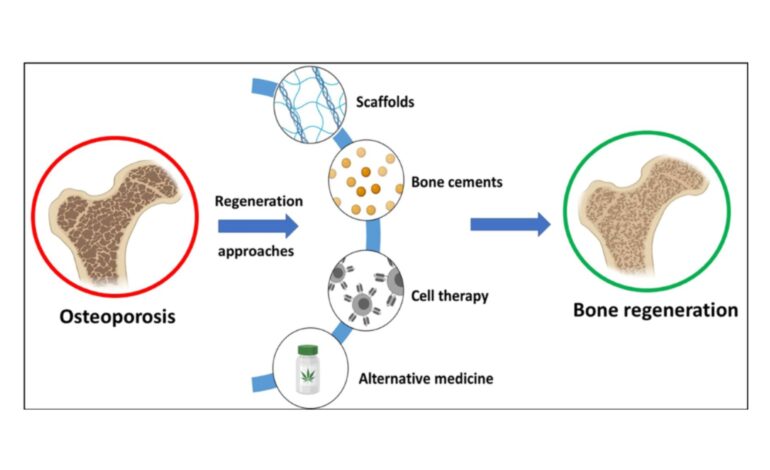
Research groups in Japan and other countries are actively exploring advanced regenerative approaches, including:
- Stem cell–based therapies
- Modulation of the Wnt signaling pathway
- Protein targets involved in bone remodeling
These areas represent promising scientific directions aimed at improving bone regeneration. However, most remain in preclinical or early clinical trial stages, and none have yet resulted in a single, approved therapy capable of fully restoring bone structure in patients.
What the viral claim gets wrong
While the idea of stimulating natural bone formation is scientifically valid and already part of existing treatment strategies, the claim that a specific Japanese-developed therapy can fully regenerate bone and reverse osteoporosis is not supported by verified clinical evidence.
At present:
- No unified “regenerative cure” exists for osteoporosis
- Advances in bone-building therapies are incremental, not transformative breakthroughs
- All emerging treatments must still pass long-term safety and efficacy trials
Conclusion
The direction highlighted in the viral narrative aligns with legitimate scientific goals in osteoporosis research, particularly the push toward enhancing bone formation rather than only preventing loss. However, it misrepresents early-stage research as an established or imminent cure.
Osteoporosis treatment is steadily advancing, but current progress remains grounded in evolving, evidence-based therapies rather than a single breakthrough solution.
Disclaimer
This article is for informational purposes only and is based on currently available peer-reviewed medical knowledge. It does not constitute medical advice. Readers should consult qualified healthcare professionals for diagnosis or treatment of osteoporosis or any medical condition.