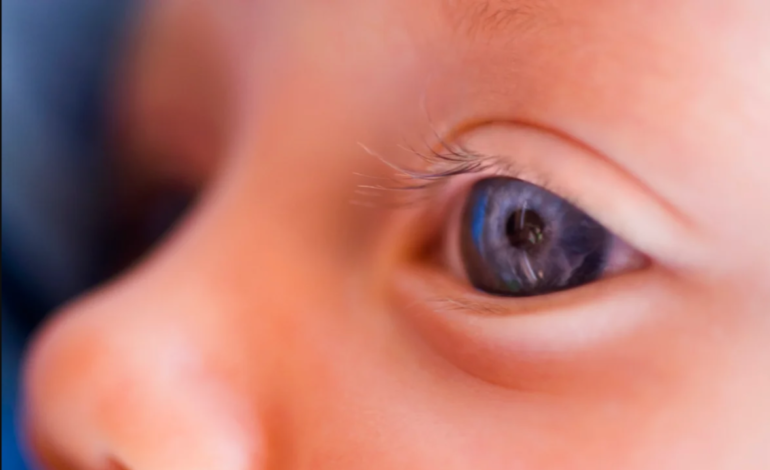
Gene therapy restores vision in children born with rare inherited blindness: Breakthrough treatment offers new hope for genetic eye disorders

By: Dr. Avi Verma
Doctors and researchers in London have reported remarkable success using an experimental gene therapy to restore vision in children born with one of the most severe inherited eye disorders, known as AIPL1-related Leber Congenital Amaurosis (LCA4).
The condition is caused by mutations in the AIPL1 gene, which is essential for the healthy functioning of retinal photoreceptor cells. Children born with this disorder are typically considered legally blind from infancy and are often only able to distinguish between light and darkness. Over time, the disease progressively destroys retinal cells, leading to profound vision loss.
The pioneering treatment was developed through research led by specialists at Moorfields Eye Hospital and the UCL Institute of Ophthalmology. The procedure involved a highly delicate “keyhole” surgery in which surgeons injected healthy copies of the defective AIPL1 gene directly into the retina at the back of one eye. The healthy gene copies were delivered using a harmless viral vector designed to penetrate retinal cells and restore their function.
The results have been described by researchers as “life-changing.” Following treatment, several children showed dramatic improvements in functional vision. Some were able to recognize faces, identify shapes and objects, navigate independently, draw, and even begin reading and writing — milestones previously thought impossible for children affected by this condition.
Researchers also observed that the treated eye maintained significantly improved vision over long-term follow-up, while the untreated eye continued to deteriorate, reflecting the natural progression of the disease. This contrast provided strong evidence that the therapy itself was responsible for the visual improvements.
The findings, published in medical research journals including The Lancet, are being viewed as a major breakthrough in the field of inherited retinal diseases. Scientists say the study demonstrates that early intervention with gene therapy may not only slow disease progression but potentially restore meaningful vision in certain forms of childhood blindness.
However, experts caution that the treatment remains under ongoing clinical evaluation. Researchers are continuing to study the long-term durability of the therapy, optimal timing for intervention, and broader safety outcomes before it becomes widely available.
Source: Clinical studies conducted by Moorfields Eye Hospital and UCL Institute of Ophthalmology, London.
Photo Credit: Moorfields Eye Hospital.
Medical Disclaimer
This article is intended for informational and educational purposes only and should not be considered medical advice, diagnosis, or treatment. Readers should consult qualified healthcare professionals for medical concerns or treatment decisions. Experimental therapies discussed in this article may not yet be widely available or approved in all countries.