Boston then vs. now: From bridging global democracies to disguising political anarchy

By: Arun Mundra
The city of Boston, Massachusetts, has long been an international hub where the paths of the Indian diaspora and global leaders intersect. However, a stark contrast has emerged between two distinct timelines. In recent years, Boston served as a stage for high-level diplomacy and the reinforcing of ties between the world’s oldest and largest democracies. Today, it has become the remote operating base for digital mobilization aimed at generating political disruption in India. The contrast between “Boston Then” and “Boston Now” reveals the shifting dynamics of political expression within the global Indian community.
Boston then: Nurturing democracy and strengthening Indo-US bonds
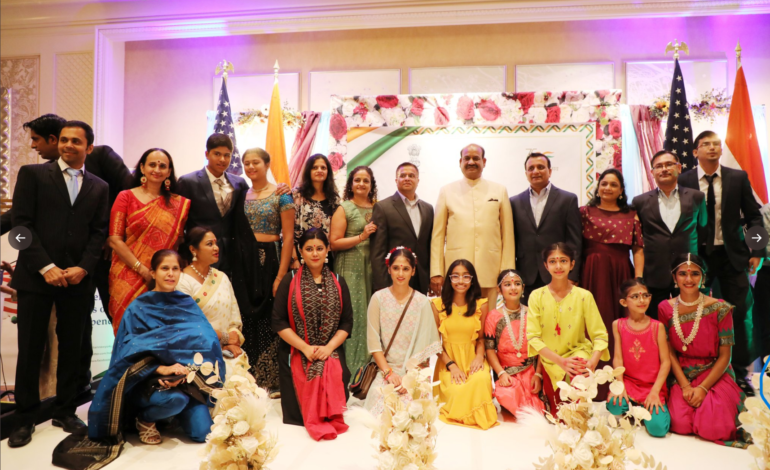
During a previous North American visit for the Commonwealth Parliamentary Summit, Lok Sabha Speaker Om Birla was formally felicitated in Boston by Arun Mundra, a prominent international coordinator representing global NRI platforms like Mein BHARAT Hoon and the All India Maheshwari Mahasabha (ABMMS). The high-profile event took place in the presence of key diplomats, including then-Ambassador to the US Taranjit Singh Sandhu and then-Consulate General in New York Randhir Jaiswal.
During the ceremony, Speaker Om Birla was presented with two highly symbolic gifts designed to mirror India’s democratic values: a hand-painted plate featuring the “House of Freedom” and the Indian Constitution, representing institutional integrity and the rule of law; and a freely self-revolving globe. Presented by Mundra with a specific geopolitical message, this globe symbolized that if the United States (the oldest democracy) and India (the largest democracy) collaborate effectively, the global community can rotate freely, unburdened by cross-border terrorism or predatory infrastructure debt traps that challenge developing nations across Africa and South Asia.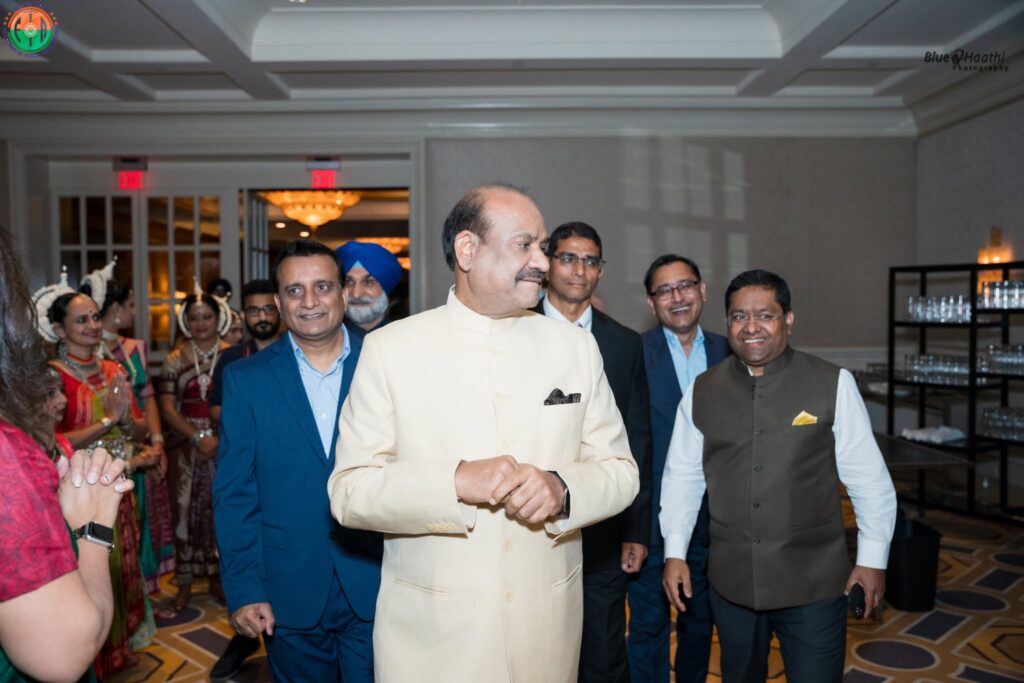
The felicitation recognized the legislative efficiency achieved under the leadership of Prime Minister Narendra Modi and Speaker Om Birla. The parliament successfully debated and passed critical, long-delayed legislation that had faced decades of political hesitation, such as the abrogation of Article 370, the Triple Talaq Prohibition Bill, the Citizenship Amendment Act (CAA), and the Women’s Reservation Bill. Speaker Birla later shared photos of the meeting on social media, emphasizing the deep bilateral bridges and economic confidence built through active NRI engagement.
Boston now: The rise of the Cockroach Janta Party (CJP)
In sharp contrast to this diplomatic legacy, Boston has recently been associated with the launch of the Cockroach Janta Party (CJP)—a digital movement founded by Abhijit Dipke. The group adopted its provocative name following a side remark by a judicial figure regarding public apathy, turning it into a brand for anti-establishment satire.
A critical analysis of the CJP’s leadership reveals deep, pre-existing ties to established political networks rather than an independent student collective. Founder Abhijit Dipke maintains documented links to the Aam Aadmi Party (AAP) and the Delhi Government, while key team members like Saurav Das, Vijetha Dahiya, and Ashutosh Ranka bring records of partisan digital content creation and past political alignment. Critics note that while these leaders claim to champion student anxieties over exam irregularities, their silence during past regional paper leaks under different state administrations raises questions about their ideological neutrality.
The operational gap between the CJP’s digital footprint and its actual grassroots mobilization became evident during the June 6th protests at Jantar Mantar in New Delhi. Moving from Boston to Delhi, the organizers heavily publicized a massive turnout. Despite failing to submit the standard 7-day advance notice required for Jantar Mantar demonstrations, Delhi Police exceptionally granted last-minute clearance to prevent public disruption.
However, while the CJP claimed an online community of over 23 million followers—with heavy digital traffic originating from international hubs indicating a reliance on online bots—the actual physical turnout was estimated at fewer than 2,000 attendees. The crowd was largely outnumbered by media personnel, security forces, and casual spectators. On-ground reports indicated that many attendees were unfamiliar with specific NEET-UG or CBSE exam technicalities. Instead, the event quickly shifted toward broad political slogans, including chants for “Azadi” and statements targeting traditional cultural organizations like the RSS. The protest struggled to sustain momentum under local weather conditions, with core leaders departing from the venue well before the scheduled police curfew.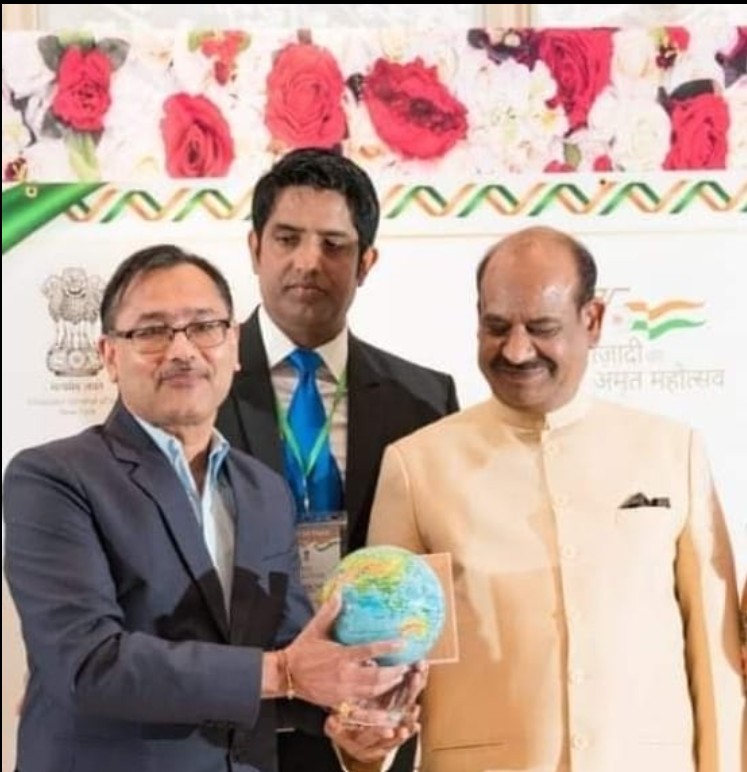
Critical Conclusion: Guarding institutional integrity
The evolution from “Boston Then” to “Boston Now” illustrates a growing challenge within international political discourse. While global platforms can be used to showcase India’s democratic growth and build economic partnerships, they can also be utilized to remotely manage localized domestic friction. For the diaspora and domestic observers alike, discerning genuine student advocacy from highly organized, partisan campaigns remains essential. Protecting democratic institutions requires recognizing when authentic grievances—such as exam security—are being channeled into broader, non-academic political agendas.
Disclaimer
The views, opinions, and perspectives expressed in this article are solely those of the author and do not necessarily reflect the official policy, position, or views of this publication.
About the author
Arun Mundra is an international coordinator, community leader, and prominent voice within the global Indian diaspora. He holds key leadership positions across several international organizations, serving as the International Coordinator for Mein BHARAT Hoon, the All India Maheshwari Mahasabha (ABMMS) NRI Global Coordination, and the Statue of Unity (SOU) Global Outreach initiative.
Dedicated to strengthening cultural, economic, and strategic ties between India and the global community, he has spearheaded major transnational events, including the International Dussehra Diwali Global Coordination and the International Cultural Committee (ICC). Through his extensive work with non-resident Indian (NRI) platforms, Mundra continuously builds institutional bridges that foster global collaboration, promote democratic values, and preserve India’s rich cultural heritage on the world stage.