India’s permanent seat at the UN Security Council: A historic wrong that must finally be corrected

By: Dr Avi Verma
As External Affairs Minister Dr. S. Jaishankar formally launched India’s campaign for election to the United Nations Security Council (UNSC) for the 2028–29 term, he also reaffirmed India’s broader vision for global governance under the framework of SHANTI—Securing Holistic Advancement through Norms, Trust and Integrity. The campaign emphasizes strengthening the voice of the Global South, reforming multilateral institutions, advancing peacekeeping, promoting the responsible use of artificial intelligence, ensuring maritime security, and combating terrorism.
These are commendable priorities. Yet, they also highlight a deeper contradiction that the international community can no longer ignore.
How can the world’s largest democracy continue to be excluded from permanent membership of the very body responsible for maintaining international peace and security?
A Security Council Stuck in the Past
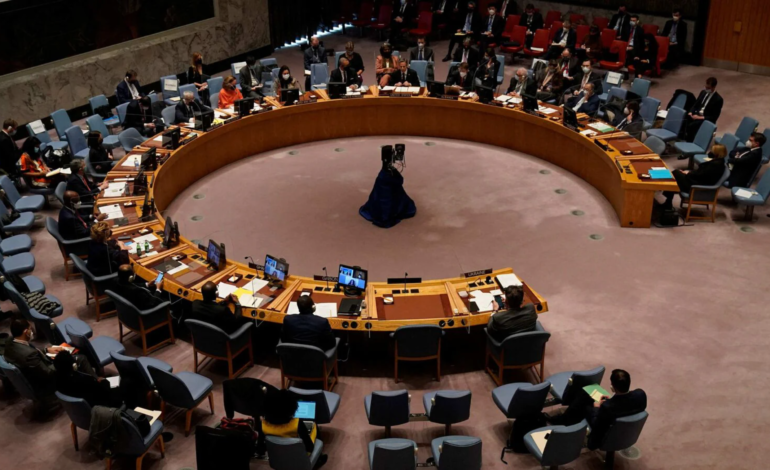
The United Nations was founded in 1945 by 51 member states in the aftermath of World War II. The five permanent members of the Security Council—the United States, the Soviet Union (now Russia), the United Kingdom, France, and China—reflected the geopolitical realities of that era.
Eighty years later, the world has changed beyond recognition.
The UN now comprises 193 member states. Colonial empires have vanished. Economic and political influence has shifted dramatically toward Asia, Africa and Latin America. India has emerged as the world’s most populous nation, the largest democracy, one of the fastest-growing major economies, and an indispensable voice in international affairs.
Yet the permanent membership of the Security Council remains frozen in time.
A global institution that seeks legitimacy cannot continue to operate under a power structure designed for a post-war world that no longer exists.
India’s Credentials Are Beyond Dispute
India’s claim to permanent membership is based on merit, not sentiment.
It represents nearly one-sixth of humanity. It is a founding member of the United Nations and has consistently championed international law, peaceful dialogue, sovereign equality and multilateral cooperation. It is a nuclear power, a space-faring nation, a leading technology hub, and a trusted development partner across the Global South.
Perhaps no other country has demonstrated such sustained commitment to the United Nations without enjoying permanent representation.
India has contributed nearly 300,000 peacekeepers to around 50 UN peacekeeping missions, making it one of the largest cumulative contributors in UN history. Indian soldiers have served in some of the world’s most dangerous conflict zones, often making the ultimate sacrifice in the cause of international peace.
Its humanitarian record is equally compelling. Whether through disaster relief, development partnerships, Vaccine Maitri during the COVID-19 pandemic, or leadership in initiatives such as the International Solar Alliance and the Coalition for Disaster Resilient Infrastructure, India has consistently acted as a responsible stakeholder in the international order.
The Shadow of History
No discussion of India’s campaign is complete without acknowledging one of the most debated episodes in its diplomatic history.
For decades, many Indians have believed that Prime Minister Jawaharlal Nehru “gave away” India’s permanent seat to China. The historical record is more nuanced—but it is no less consequential.
There is no credible evidence that India was ever formally offered a permanent seat on the Security Council. Any such change would have required amendment of the UN Charter and broad international agreement.
However, declassified diplomatic correspondence confirms that in the early 1950s, American officials informally explored the possibility of India replacing the Republic of China (Taiwan) on the Security Council. A few years later, Soviet leaders also indicated support for expanding the Council to include India.
Nehru chose not to pursue either possibility. He believed that the People’s Republic of China should rightfully occupy China’s seat and famously wrote that India should not seek permanent membership “at the cost of China.”
History has judged that decision with increasing skepticism.
Whether one views it as an act of diplomatic idealism or a strategic miscalculation, the consequences are undeniable. China today sits as a permanent member with veto power and has frequently opposed or avoided endorsing India’s own aspirations for permanent membership.
India continues to campaign for a seat that many believe it should have secured decades ago.
History cannot be rewritten, but it should certainly be remembered—not to assign blame, but to ensure that idealism never again comes at the expense of national interest.
Reform Is Essential for UN Credibility
India’s demand is not an isolated aspiration.
For years, the G4 nations—India, Japan, Germany and Brazil—have advocated expanding both permanent and non-permanent membership of the Security Council. African nations have similarly argued that a continent of more than a billion people cannot remain without permanent representation.
Even among the existing permanent members, the case for India has gained significant support. The United States, Russia, France and the United Kingdom have all publicly endorsed India’s aspiration for permanent membership.
Only meaningful institutional reform remains elusive.
An organization that repeatedly speaks of inclusion, equity and democratic governance cannot indefinitely preserve a structure that excludes the world’s largest democracy from permanent decision-making.
India’s Voice Matters More Than Ever
Dr. Jaishankar’s campaign appropriately places special emphasis on strengthening the voice of the Global South.
That message resonates because India has earned the trust of developing nations through partnership rather than dependency.
Unlike many powers that have viewed the developing world primarily through strategic competition, India has emphasized capacity building, digital public infrastructure, affordable healthcare, disaster relief and sustainable development. It has sought to be a bridge between developed and developing economies, advocating dialogue instead of division.
Similarly, India’s insistence on objective and evidence-based action against terrorism reflects decades of firsthand experience. A transparent sanctions regime free from political selectivity would strengthen—not weaken—the credibility of the Security Council.
The Time Has Come
India is not asking the world for a favor.
It is asking the United Nations to recognize the world as it exists today.
A Security Council that excludes the world’s largest democracy, one of its largest economies, one of its biggest contributors to peacekeeping, and one of the most influential voices of the Global South cannot credibly claim to represent the international community.
India’s campaign for the 2028–29 Security Council term is important. But it should not become another exercise in symbolic diplomacy while meaningful reform remains indefinitely postponed.
The international community has spoken for decades about making the United Nations more representative, more democratic and more effective.
Those promises must now be matched by action.
The world has changed. India has changed. The Security Council must change as well.
Granting India permanent membership would not simply correct a historical imbalance—it would strengthen the legitimacy, credibility and effectiveness of the United Nations itself.
The question before the world is no longer whether India deserves a permanent seat.
The real question is how much longer the United Nations can afford to deny one.