Healthy Heart, Healthy Life

Part 5 – Heart Failure & Cardiomyopathy: When the Heart Struggles to Keep Up
Understanding Heart Failure, Cardiomyopathy, Warning Signs, Diagnosis, and Modern Treatment
By: Dr. Avi Verma
Introduction
In the first article of the Healthy Heart, Healthy Life series, we explored how the heart functions as the body’s life-sustaining pump. Part 2 examined Coronary Artery Disease (CAD) and ways to reduce the risk of heart attack. Part 3 focused on high blood pressure, the “Silent Killer,” and its damaging effects on the heart, brain, kidneys, eyes, and blood vessels. Part 4 examined heart rhythm disorders, including arrhythmias and atrial fibrillation, and the modern treatments available to protect the heart.
In this fifth installment, we turn to heart failure and cardiomyopathy—conditions in which the heart muscle becomes weakened, enlarged, stiff, or otherwise unable to pump blood as effectively as the body needs. The term “heart failure” does not mean the heart has stopped working. Rather, it means the heart is struggling to meet the body’s demands. Early diagnosis, appropriate treatment, and lifestyle changes can significantly improve symptoms and quality of life.
What Is Heart Failure?
Heart failure, sometimes called congestive heart failure (CHF), is a chronic condition in which the heart cannot pump enough blood to meet the body’s needs.
When pumping becomes less effective, blood and fluid can build up, particularly in the lungs, legs, ankles, and abdomen. Heart failure can develop gradually or follow damage caused by a heart attack or another cardiovascular condition.
Importantly, heart failure is not a single disease. It can result from coronary artery disease, high blood pressure, diabetes, heart valve disease, abnormal heart rhythms, or diseases of the heart muscle.
Understanding Cardiomyopathy
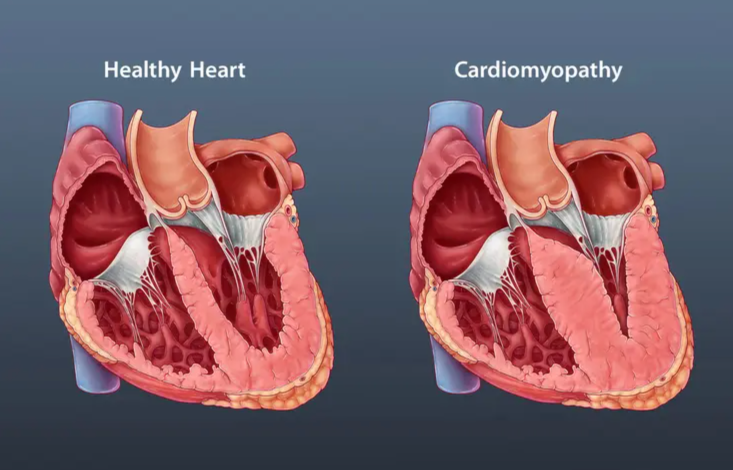
Cardiomyopathy refers to diseases that affect the heart muscle, changing its size, shape, thickness, or ability to pump and relax.
Three important forms include:
Dilated Cardiomyopathy: The heart chambers, particularly the left ventricle, become enlarged and weakened, reducing the heart’s pumping ability. Causes can include genetic conditions, infections, certain medications or toxins, and excessive alcohol use.
Hypertrophic Cardiomyopathy: The heart muscle becomes abnormally thick, which can interfere with the heart’s ability to fill with blood and, in some patients, obstruct blood leaving the heart. Some forms are inherited.
Restrictive Cardiomyopathy: The heart muscle becomes stiff and cannot relax and fill normally. Although the heart may contract relatively well, its filling capacity is impaired.
Two Major Types of Heart Failure
Heart failure is also classified according to how effectively the left ventricle pumps.
Heart Failure with Reduced Ejection Fraction (HFrEF): The heart muscle has reduced pumping strength. Ejection fraction measures the percentage of blood pumped from the left ventricle with each contraction.
Heart Failure With Preserved Ejection Fraction (HFpEF): The heart may squeeze relatively normally but is often stiff and does not relax and fill properly.
This distinction is important because modern treatment is increasingly tailored to the specific type and cause of heart failure.
Know the Warning Signs
Symptoms may develop slowly and can easily be mistaken for normal aging or lack of fitness. Common warning signs include:
- Shortness of breath, especially during activity or when lying down
- Unusual fatigue or weakness
- Swelling of the feet, ankles, legs, or abdomen
- Persistent cough or wheezing
- Rapid or irregular heartbeat
- Reduced ability to exercise
- Difficulty sleeping because of breathing problems
- Loss of appetite or nausea
- Sudden or unexplained weight gain caused by fluid retention
For people already diagnosed with heart failure, monitoring daily weight can be useful because a rapid increase may signal increasing fluid retention. Patients should follow their physician’s instructions about when to report changes.
What Causes Heart Failure?
Major causes and risk factors include:
- Coronary artery disease and previous heart attacks
- Long-standing high blood pressure
- Diabetes
- Heart valve disease
- Abnormal heart rhythms
- Cardiomyopathy
- Congenital heart disease
- Inflammation or infection of the heart muscle
- Certain medications or cancer treatments
- Obesity and metabolic disorders
- Excessive alcohol use
This is why controlling cardiovascular risk factors early can help prevent or delay heart failure.
How Is Heart Failure Diagnosed?
Diagnosis begins with a medical history and physical examination. Physicians may check blood pressure, heart rate, breathing, and signs of fluid accumulation.
Common diagnostic tests include:
Electrocardiogram (ECG/EKG): Evaluates electrical activity and may reveal rhythm abnormalities or evidence of previous heart damage.
Echocardiogram: Uses ultrasound to examine the heart’s chambers, valves, pumping function, and ejection fraction.
Blood tests: BNP or NT-proBNP may help determine whether heart failure is contributing to symptoms.
Chest X-ray: Can show an enlarged heart or fluid congestion in the lungs.
Depending on the situation, physicians may also use stress testing, cardiac MRI, CT imaging, or cardiac catheterization.
Modern Treatment
Heart failure is a serious condition, but modern cardiology has significantly expanded treatment options.
For many patients with reduced ejection fraction, treatment may include several classes of medications, including ARNI/ACE inhibitors/ARBs, evidence-based beta blockers, mineralocorticoid receptor antagonists (MRAs), and SGLT2 inhibitors. Diuretics may be prescribed to reduce excess fluid and relieve congestion.
Lifestyle changes are equally important. Patients may be advised to follow a heart-healthy diet, limit sodium when recommended, exercise safely, maintain a healthy weight, avoid tobacco, control diabetes and blood pressure, and take medications exactly as prescribed.
Advanced Therapies
Some patients may benefit from Cardiac Resynchronization Therapy (CRT), which coordinates the contractions of the heart’s ventricles.
An Implantable Cardioverter-Defibrillator (ICD) may be recommended for selected patients at increased risk of dangerous ventricular arrhythmias and sudden cardiac death.
For patients with advanced heart failure, a Left Ventricular Assist Device (LVAD) may provide mechanical support to the left ventricle. In carefully selected patients, LVAD can serve as a bridge to heart transplantation or as long-term therapy.
For a small number of patients with severe, advanced heart failure, heart transplantation may offer an opportunity for substantially improved survival and quality of life.
Prevention Begins Early
Many pathways leading to heart failure begins years before symptoms appear. Controlling blood pressure, cholesterol, diabetes, and weight, avoiding tobacco, exercising regularly, eating a heart-healthy diet, and treating coronary artery disease can reduce cardiovascular risk.
People with a family history of cardiomyopathy or unexplained sudden cardiac death should discuss that history with their physician. In selected cases, genetic evaluation or screening may be appropriate.
Conclusion: Listen to Your Heart
Heart failure is serious, but it does not mean that life has come to an end. Modern medications, devices, procedures, mechanical support, and transplantation have transformed the treatment of advanced heart disease.
The key is early recognition and consistent medical care.
New or worsening shortness of breath, unexplained swelling, unusual fatigue, declining exercise tolerance, or sudden weight changes should not simply be dismissed as aging.
Your heart works every minute of every day. Give it the attention it deserves.
Know your risks. Recognize the warning signs. Seek medical advice early. A healthy heart is not only about living longer, it is about living better.
Disclaimer
The information presented in this Healthy Heart, Healthy Life series is intended solely for educational and public awareness purposes. It is not intended to replace professional medical advice, diagnosis, or treatment, nor should it be considered a medical consultation. Readers should consult their physician or another qualified healthcare professional regarding any questions or concerns about their heart health or before making decisions related to their medical care.