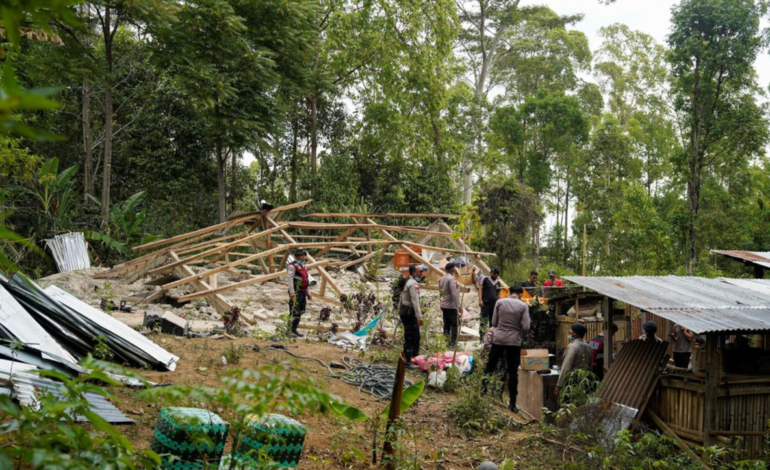
Indonesia earthquake: Thousands evacuate after quake kills at least 53

Around 5,000 people have been forced to evacuate after a powerful magnitude-7.7 earthquake struck eastern Indonesia, killing at least 53 people and leaving more than 130 injured, according to authorities. The disaster triggered landslides, damaged homes and public facilities, and blocked roads across parts of East Nusa Tenggara province.
The earthquake struck off Flores Island early Saturday at a shallow depth of about 10 kilometres, intensifying the destruction across several communities. Rescue teams have been working to reach areas cut off by landslides and damaged roads, while communication and power disruptions have complicated relief operations.
The hardest-hit areas include Sikka, Manggarai, East Manggarai and Nagekeo. In Sikka alone, more than 3,300 residents have reportedly taken shelter in temporary facilities, including tents and a sports arena. Authorities have deployed thousands of military and police personnel to support search-and-rescue and emergency relief operations.
The quake also damaged hundreds of homes and more than 100 public facilities, including schools, healthcare centres, government buildings and places of worship. Emergency supplies, including food, water, medicines and shelter materials, are being sent to affected communities.
A tsunami warning issued after the earthquake was later lifted. Small tsunami waves were nevertheless recorded in some coastal areas, with authorities continuing to monitor the region as aftershocks persisted. Nearly 1,000 aftershocks had been recorded by Sunday, adding to fears among residents and making rescue efforts more difficult.
Indonesia sits along the Pacific Ring of Fire and is highly vulnerable to earthquakes and volcanic activity. The latest disaster has revived memories of the devastating 1992 Flores earthquake and tsunami and highlighted the continuing risks faced by communities across the archipelago.
As rescue operations continue, authorities are prioritizing isolated communities where residents remain in need of basic necessities and medical assistance.