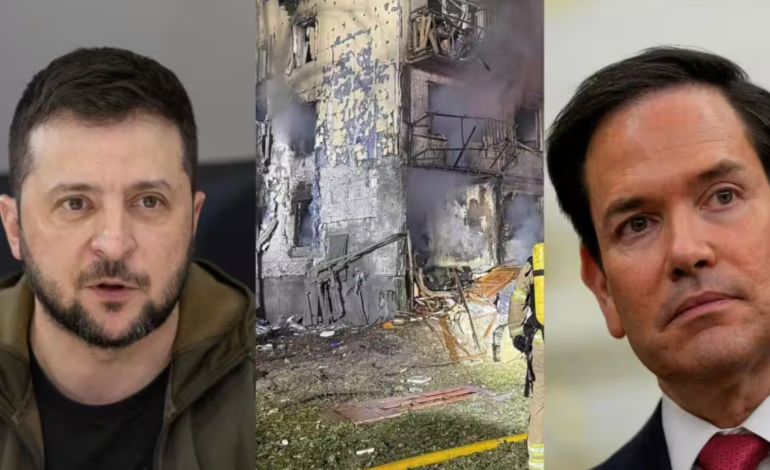
Zelensky questions US intelligence-sharing after Russian missile strikes on Ukraine

Ukrainian President Volodymyr Zelensky has questioned the reliability of US intelligence support after Ukraine reportedly received no advance warning before a Russian ballistic missile attack overnight Sunday into Monday. He said Kyiv had received no clear explanation from Washington for the apparent intelligence gap.
Zelensky said Ukraine had not been alerted by its partners ahead of the first wave of the attack, particularly through the early-warning information it typically receives from the United States about incoming missile threats.
“This is already the third time in a short period that we have had no such warning about ballistic missiles,” Zelensky said, suggesting that the latest incident was part of a wider pattern of disruptions.
US President Donald Trump rejected suggestions that intelligence-sharing had been reduced. Speaking to reporters on Monday, Trump said the United States continued to share substantial intelligence, adding that Washington had provided considerable assistance to Ukraine.
The exchange comes amid growing tensions between the two leaders over the course of the war with Russia. Zelensky has criticized the Trump administration’s approach, while Trump has accused the Ukrainian president of being unwilling to bring the conflict to an end.
Ukrainian officials suspect interruptions in intelligence sharing
A report published by Bloomberg, citing Ukrainian officials, said Kyiv suspects the United States may have intermittently restricted intelligence sharing related to Russian attacks. According to the report, Ukrainian officials believe the first wave of Russian strikes proceeded without the usual advance warnings, while the early-warning system was restored ahead of a second wave later that evening.
A senior US Defense Department official, speaking anonymously, reportedly said there had been no change in Pentagon policy on intelligence sharing with Ukraine. Ukrainian officials, however, described the support provided over the preceding week as unusually inconsistent and said Washington had not explained the apparent interruptions.
The dispute recalls March 2025, when the Trump administration temporarily suspended intelligence sharing with Ukraine following a contentious White House meeting between Trump and Zelensky. The suspension was subsequently lifted.
It remains unclear whether the latest gaps resulted from a policy decision, operational circumstances or another cause. The differing accounts have renewed questions about the consistency of US support as Ukraine continues to defend itself against Russian attacks.