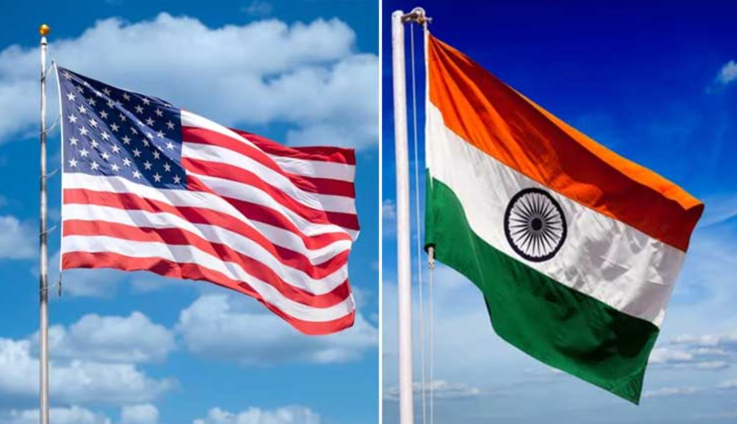
US policy uncertainty pushes India to diversify global partnerships: Foreign Affairs

Policy uncertainty under US President Donald Trump has prompted India to reassess its strategic and economic alignment with Washington and expand engagement with alternative global partners, according to an analysis published in Foreign Affairs.
The article argues that New Delhi had initially expected the United States to prioritize India as a central partner in counterbalancing China’s growing influence. However, perceived pressure tactics and shifting trade priorities from Washington have altered that trajectory, encouraging India to broaden its geoeconomic outreach.
A key example cited is India’s trade agreement signed in January with the European Union. European Commission President Ursula von der Leyen described the pact as the “mother of all deals,” projecting an estimated €30 billion in export gains for both sides. The agreement was accompanied by a new defense partnership and several complementary arrangements, signaling a deeper strategic alignment between New Delhi and Brussels.
Beyond Europe, India has also strengthened bilateral economic ties with countries such as Australia and the United Arab Emirates. These agreements, the article notes, are part of a broader strategy to diversify trade relationships, reduce overdependence on any single power, and reinforce supply chain resilience.
The analysis further recommends that India consider joining the Comprehensive and Progressive Agreement for Trans-Pacific Partnership (CPTPP), widely regarded as one of Asia’s most influential trade groupings. Established in 2018 after the US withdrawal from the Trans-Pacific Partnership, the CPTPP reduces tariffs across goods and services while enforcing high standards in labor rights, intellectual property, and investment regulations.
The bloc currently includes 12 member nations — among them Australia, Canada, Japan, Singapore, the United Kingdom, and Vietnam — collectively representing about 15 percent of the global economy. Several additional countries, including South Korea and Cambodia, have expressed interest in joining.
While acknowledging the political and economic challenges India would face in aligning with CPTPP standards, the article contends that membership could accelerate India’s integration into regional supply chains and provide a significant boost to exports. At the same time, CPTPP nations would gain enhanced access to India’s vast and expanding consumer market.
The report concludes that amid evolving global trade dynamics, India’s strategic recalibration reflects a pragmatic effort to safeguard economic growth while maintaining flexibility in an increasingly multipolar world.