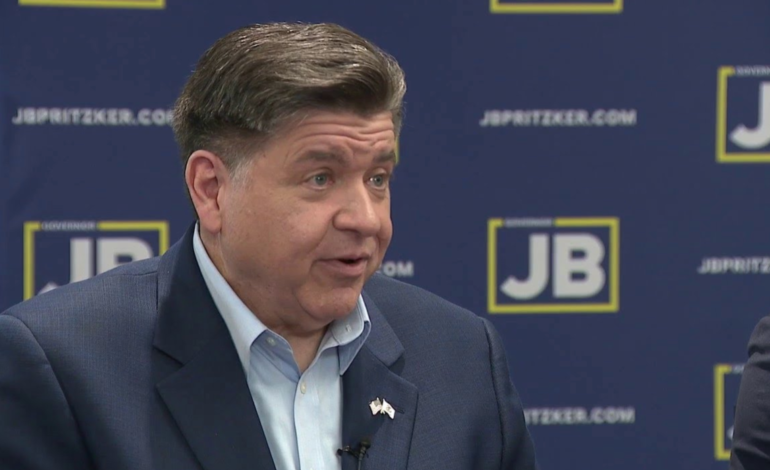
Analysis: J.B. Pritzker secures Democratic nomination for Illinois governor, sets up 2026 rematch with Darren Bailey

By: Dr. Avi Verma
Incumbent Governor J.B. Pritzker has secured the Democratic nomination for Illinois governor in the 2026 primary elections, running unopposed and positioning himself for a potential third term in office. His uncontested path underscores both Democratic unity and his continued dominance within the state party as he heads into a general election rematch with Republican challenger Darren Bailey.
Bailey, the 2022 GOP nominee and former state senator, emerged from a contested Republican primary to once again challenge Pritzker in what is shaping up to be one of the most closely watched statewide races of the cycle.
Unopposed nomination reflects Democratic consolidation
Pritzker’s path to the nomination was straightforward, with no Democratic challengers entering the race. The absence of intra-party competition allowed him to conserve resources and shift focus early to the general election.
His uncontested nomination also reflects strong institutional backing from Democratic leaders across Illinois, who have largely rallied behind his leadership heading into a competitive midterm environment.
Factors behind Pritzker’s uncontested primary
1. Incumbency and governing record
Pritzker’s incumbency remains a defining advantage. After winning reelection in 2022 by a wide margin, he enters 2026 with strong name recognition, a statewide political network, and an established policy record spanning economic development and progressive reforms.
2. Party unity and strategic coordination
Illinois Democrats opted for early consolidation behind Pritzker, avoiding internal divisions seen in other races. This unity allows the party to concentrate resources on the general election and down-ballot contests.
3. Financial strength
Pritzker’s personal wealth continues to give him a major financial edge. His ability to self-fund campaigns at a scale unmatched in Illinois politics strengthens his position and deters serious primary challenges.
Republican nominee: Darren Bailey returns for rematch
Darren Bailey secured the Republican nomination after defeating a field that included Ted Dabrowski, DuPage County Sheriff James Mendrick, and developer Rick Heidner.
Bailey, who previously ran against Pritzker in 2022, brings a platform centered on cultural conservatism, opposition to the SAFE-T Act, and criticism of taxes, public spending, and cost of living pressures.
While he lost by a double-digit margin in 2022, his renomination reflects continued support within the Republican base, particularly in rural and downstate Illinois.
General election outlook: familiar dynamics, structural advantage for Democrats
Illinois remains a reliably Democratic-leaning state, driven by strong support in Chicago and suburban counties. These regions provide Pritzker with a significant structural advantage heading into November 2026.
However, Bailey’s campaign is expected to once again target economic frustration, public safety concerns, and property tax debates, especially in suburban and exurban areas.
Key campaign battlegrounds
Economic conditions
Bailey is likely to emphasize affordability and cost-of-living concerns, while Pritzker will highlight economic stability and state-level policy achievements.
Public safety
Republicans are expected to focus heavily on crime and policing debates in suburban regions.
Turnout dynamics
Democratic success will depend on strong turnout in Cook County and surrounding metro areas, while Republicans will aim to maximize rural and downstate margins.
National political climate
As a midterm election cycle, broader national sentiment and party enthusiasm are likely to shape turnout patterns.
Conclusion: A familiar rematch with high stakes
Governor J.B. Pritzker’s unopposed nomination reflects both his entrenched position within Illinois politics and his party’s strategic focus on the general election. His combination of incumbency, funding strength, and institutional backing places him in a strong position heading into November.
Facing Darren Bailey again, Pritzker enters a rematch shaped by familiar ideological divides and structural voting patterns. While Democrats hold a clear advantage in Illinois, the outcome will depend on turnout, economic sentiment, and each campaign’s ability to expand beyond their core bases.
As the race unfolds, the central question remains whether Pritzker can convert incumbency into another decisive victory or whether Bailey can shift the dynamics in a state long dominated by Democrats.