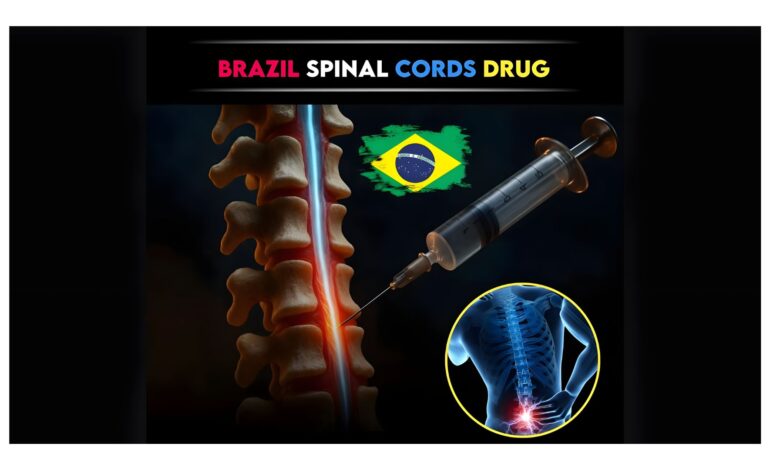
Brazil unveils experimental drug aimed at repairing spinal cord damage

By Dr. Avi Verma
Brazil has recently introduced an experimental medical treatment that scientists hope could help repair spinal cord damage, drawing global interest in regenerative medicine. The therapy, known as Polylaminin, is being studied by researchers at the Federal University of Rio de Janeiro after more than 25 years of scientific research.
The challenge of spinal cord injuries
Spinal cord injuries remain one of modern medicine’s most difficult challenges. Trauma such as car accidents, falls, or sports injuries can permanently disrupt the nerve fibers that carry signals between the brain and body. Unlike many other tissues, the central nervous system has limited regenerative ability, making paralysis caused by spinal cord injury typically permanent.
What is Polylaminin?
Polylaminin is derived from laminin, a protein naturally found in the extracellular matrix of human tissues, including the placenta. Scientists have developed a modified polymer form that can act as a biological scaffold to support nerve fiber regrowth.
The treatment is designed to:
- Stimulate regeneration of damaged nerve cells
- Encourage axons (nerve fibers) to reconnect across injured areas
- Reduce inflammation around the injury site
- Support communication between the brain and body
The drug is administered directly into the injured spinal cord region and is often combined with intensive rehabilitation therapy.
Early research results
Initial studies and early experimental treatments have shown promising signs:
- Some patients regained partial movement or sensation
- Others showed improved muscle control and voluntary movement
- Certain cases demonstrated significant functional recovery after treatment and rehabilitation
Animal studies had previously shown similar results, with treated animals exhibiting improved mobility and nerve regeneration compared with untreated cases.
However, scientists caution that these results involve very small sample sizes, and spontaneous recovery can occur in spinal cord injury patients. Larger clinical trials are necessary to draw definitive conclusions.
Availability in India and the United States
Currently, Polylaminin is not commercially available anywhere, including India or the U.S. Key points:
- The drug is still in experimental research phases
- Brazil’s health regulator ANVISA has only approved early-stage clinical trials to evaluate safety
- Large-scale human trials are required before potential regulatory approval
Even if trials succeed, international availability may take several years or over a decade.
Why this research matters
If confirmed as safe and effective, Polylaminin could represent a landmark advance in neurology and regenerative medicine. Millions of people worldwide live with paralysis due to spinal cord injuries, and even partial restoration of nerve function could dramatically improve mobility, independence, and quality of life.
For now, researchers and neurologists urge cautious optimism, as scientific breakthroughs often require years of testing before becoming widely available treatments.
Disclaimer
This article is for general health awareness and educational purposes only. The treatment described is experimental and not yet approved for routine use in India, the United States, or most countries. It should not be considered medical advice. Patients with spinal cord injuries should consult qualified healthcare professionals regarding appropriate treatment options.