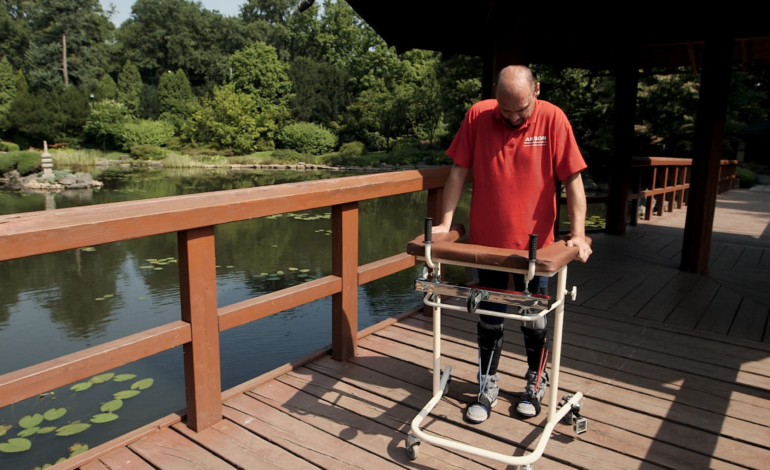
Breakthrough stem cell treatment helps paralyzed man walk again

By: Dr. Avi Verma
In a landmark achievement for regenerative medicine, a paralyzed man has regained the ability to walk after undergoing what scientists are calling the world’s first successful stem cell treatment for a severe spinal cord injury. This achievement challenges decades-old assumptions in neuroscience, where major spinal trauma was long thought to result in permanent paralysis.
A new hope for spinal cord injury
For many years, spinal cord injuries that sever nerve connections were believed to be irreversible. The spinal cord acts as the central information highway between the brain and the body—if the communication lines are broken, the signals can no longer reach muscles below the injury site. As a result, patients with severe damage lose both sensation and voluntary movement.
But recent advances in stem cell biology have opened the door to a new frontier. In this breakthrough procedure, researchers used reprogrammed stem cells designed to repair damaged nerve pathways. These cells were transplanted into the patient’s injured spinal cord with the goal of rebuilding lost connections—something once thought impossible.
How stem cells restore neural pathways
Stem cells are extraordinary because they can transform into the specific cell types the body needs. In this treatment:
- Scientists converted them into neural progenitor cells, capable of becoming neurons and supportive glial cells.
- The transplanted cells began integrating into the spinal injury site.
- Over time, they started forming new neural bridges, reconnecting disrupted nerve fibers.
As these reconnections formed, electrical signals from the patient’s brain—previously blocked by the injury—began to travel through the spinal cord again. When those signals reached the legs, voluntary movement slowly returned.
What this means for patients
The restoration of movement in a patient who was once considered permanently paralyzed represents a dramatic leap forward. While this single case does not yet symbolize a universal cure, it provides the strongest evidence yet that spinal cord regeneration is scientifically possible.
This achievement builds on decades of research into stem cell behavior, neural growth, and spinal cord repair technologies. The result is a treatment that not only regenerates tissue, but also restores functional communication between the brain and limbs.
Cautious optimism and future research
Medical experts emphasize that this therapy is still in the very early phases. Before it can become a standard treatment, researchers must:
- Conduct extensive clinical trials with larger patient groups
- Confirm long-term safety and effectiveness
- Optimize delivery methods and cell types
- Understand how the treatment performs across different kinds of spinal injuries
Even so, this pioneering case has ignited excitement around the world. It signals a future where paralysis may no longer be a permanent condition, but a reversible one—given the right medical advances.
Disclaimer
This article is for informational and educational purposes only. It is not intended to provide medical advice, diagnosis, or treatment. Readers should consult qualified healthcare professionals before making decisions related to any medical condition or therapy, including emerging or experimental stem cell treatments.