CAG report on Delhi Excise Policy: Regulatory lapses, revenue losses, and political fallout

By: Dr. Avi Verma
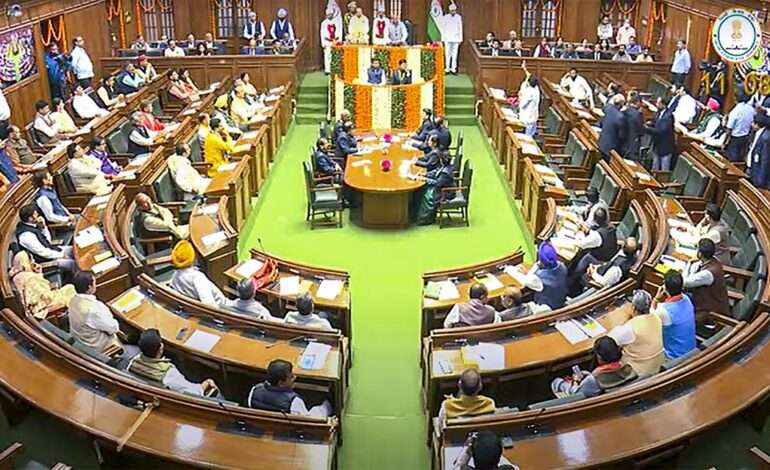
The Comptroller and Auditor General (CAG) of India has presented a damning report on the Regulation and Supply of Liquor in Delhi, exposing massive revenue losses, regulatory lapses, and serious contradictions in the Delhi Excise Policy 2021-22. The report, tabled in the Delhi Vidhan Sabha, highlights the mismanagement of the policy under Chief Minister Arvind Kejriwal’s government, raising serious concerns about governance and transparency.
However, the Kejriwal government initially refused to table the report in the assembly, citing procedural issues and dismissing its findings as politically motivated. This refusal has only added to suspicions of financial irregularities and possible corruption in the excise policy, further intensifying the political battle between the AAP-led Delhi government and the BJP-led central government.
Key findings of the CAG report
1. ₹2,000 crore revenue loss due to policy failures
The CAG report estimates that the Delhi government suffered a loss of ₹941.53 crore by failing to obtain timely approvals for liquor vends in non-conforming areas—regions where alcohol sales were not legally permitted. Another ₹890.15 crore was lost due to poor licensing management, as the government failed to re-tender liquor zones after licensees surrendered their contracts.
2. Contradictions between excise policy and Delhi master plan
The Delhi Master Plan 2021 explicitly prohibits liquor sales in certain areas. However, the Excise Policy 2021-22 mandated at least two liquor vends in each ward, directly violating existing urban planning laws. This policy contradiction created confusion, delayed implementation, and contributed to the government’s inability to generate expected revenues.
3. Political and corporate influence in liquor licensing
The report indirectly points to favoritism in liquor licensing, with certain private players benefiting at the cost of public revenue. Allegations of undue corporate influence, particularly regarding major liquor brands such as Pernod Ricard and Diageo, further fuel suspicions of a liquor lobby shaping Delhi’s excise policies.
Why the Kejriwal government refused to table the report
Despite the seriousness of the report’s findings, the AAP government initially refused to present it in the Delhi Assembly, claiming it needed more time to review the contents. However, opposition leaders argue that this delay was an attempt to suppress damaging revelations and avoid political embarrassment ahead of elections.
The refusal to table the report has only strengthened the BJP’s allegations of corruption within the Kejriwal administration. The BJP has accused the AAP leadership, including former Deputy CM Manish Sisodia, of manipulating the liquor policy to benefit select private entities, a charge that is now under CBI and ED investigation.
Political implications of the report
1. AAP’s image takes a hit
- The Delhi government’s handling of the liquor policy has now become a major election issue, with the BJP accusing AAP of large-scale corruption.
- The report may weaken Kejriwal’s national ambitions, especially as AAP tries to expand beyond Delhi and Punjab.
- The allegations of financial mismanagement could erode AAP’s credibility as a party that claims to stand against corruption.
2. Legal consequences for AAP leaders
- With CBI and ED probes ongoing, the report could provide more grounds for legal action against AAP leaders.
- Former Deputy CM Manish Sisodia, already arrested in connection with the liquor policy case, may face further scrutiny.
- If the courts take cognizance of the CAG’s findings, the Kejriwal government could face serious legal challenges.
3. Setback for Excise Policy reforms
- The failure of the Excise Policy 2021-22 may force the Delhi government to revert to the old excise model, which had more government control over liquor sales.
- The controversy could discourage other states from adopting similar liberalized liquor policies, fearing backlash and political instability.
- The liquor industry in Delhi, including retailers and distributors, faces uncertainty over future regulations.
What’s next?
The CBI and ED investigations into the Delhi liquor policy scam are expected to gain momentum following the CAG report. More legal proceedings against AAP leaders, including Manish Sisodia and possibly others in the excise department, are likely. Meanwhile, the Delhi government will have to clarify its stance on the policy’s failures, either by proposing reforms or defending its actions in court.
With elections approaching, the BJP is set to intensify its attack on AAP, using the CAG report as a central campaign issue. The Kejriwal government, on the other hand, will likely portray itself as a victim of political vendetta, a narrative it has frequently used in the past when faced with corruption allegations.
IndoUS Tribune’s analysis of the CAG report
Having reviewed the full text of the CAG report, IndoUS Tribune finds that the findings raise significant governance concerns. The loss of over ₹2,000 crore due to poor policy implementation, violations of planning laws, and opaque licensing decisions are red flags that demand greater scrutiny and accountability. While AAP has dismissed the report’s findings as politically motivated, the legal and financial consequences cannot be ignored.
Moreover, the report exposes deeper systemic issues in India’s excise policy framework, where state governments often rely on liquor revenue while failing to implement transparent, corruption-free licensing mechanisms. Whether this report leads to meaningful policy reforms or remains a tool for political mudslinging will depend on how both the ruling AAP and the opposition BJP navigate the fallout.
The IndoUS Tribune will continue to follow the developments on this issue, providing detailed updates as more information emerges.