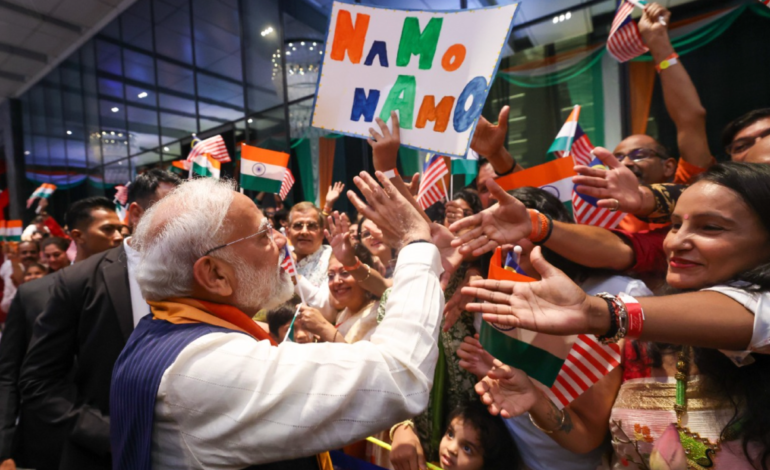
India to open first Consulate in Malaysia, PM Modi announces in Kuala Lumpur

Prime Minister Narendra Modi announced that India will soon open its first Consulate in Malaysia, marking a significant step in strengthening diplomatic, cultural, and people-to-people ties between the two nations. The announcement came during a grand Indian community reception titled “Selamat Datang Modiji” in Kuala Lumpur, where over 800 artistes performed traditional Indian dances, setting a new record in the Malaysian Book of Records for the largest such cultural presentation.
Addressing the gathering, Modi highlighted the deep-rooted historical and cultural links between India and Malaysia, emphasizing that the upcoming Consulate would enhance bilateral cooperation and provide better support to the Indian diaspora. He also welcomed the Indian government’s decision to extend Overseas Citizen of India (OCI) card eligibility to Malaysian citizens of Indian origin up to the sixth generation, a move that has been warmly received by the community.
The Prime Minister was joined by Malaysian Prime Minister Anwar Ibrahim, whose presence underscored the growing strategic partnership between the two countries. Modi praised the Indian diaspora for their contributions to Malaysia’s development while preserving their cultural heritage. He described them as a “living bridge” connecting the two nations through shared traditions, language, and values.
Reflecting on historical ties, Modi paid tribute to Netaji Subhash Chandra Bose and the legacy of the Azad Hind Fauj, which had strong roots in Southeast Asia. He framed the bilateral relationship under the concept of IMPACT – India Malaysia Partnership for Advancing Collective Transformation, calling on the diaspora to play an active role in realizing India’s vision of Viksit Bharat and Malaysia’s Madani aspirations.
The Prime Minister pointed to the cultural synergy between the two countries, citing shared culinary traditions such as Roti Canai and Malabar Parotta, as well as the popularity of Indian cinema and music in Malaysia. He also noted that Malaysian leaders, including Anwar Ibrahim, appreciate Tamil music, particularly songs by legendary actor MGR.
On the economic front, Modi highlighted India’s rapid rise from the 11th to the fourth-largest global economy in just a decade, with expectations of reaching third place soon. He pointed to India’s digital transformation, noting that nearly half of the world’s real-time digital payments occur in India. He further announced that UPI-based payments would soon be introduced in Malaysia, potentially boosting tourism and trade.
In a significant cultural initiative, Modi announced the establishment of a dedicated Thiruvalluvar Centre at Universiti Malaya, building on the earlier creation of a Thiruvalluvar Chair of Indian Studies. He also introduced Thiruvalluvar scholarships to encourage academic exchanges between India and Malaysia.
Modi highlighted the influence of Tamil heritage in Malaysia, praising the vibrant Thaipusam celebrations at Batu Caves and noting the popularity of Garba and Sikh traditions in the country. He described Tamil as “India’s gift to the world,” acknowledging the centuries-old presence of the Tamil community in Malaysia.
Concluding his address, the Prime Minister reaffirmed India’s commitment to the welfare of its citizens in Malaysia and pledged to deepen cooperation across trade, technology, culture, education, and defense. The forthcoming Indian Consulate is expected to play a crucial role in strengthening diplomatic engagement and community outreach.